2026 Top Louvered Roof Panel Types for Global Buyers
In 2026, global buyers are looking beyond attractive shade structures. They want reliable comfort, efficient drainage, and long service life. Louvered Roof Panels now support patios, restaurants, resorts, terraces, and mixed-use developments. Their performance depends on more than appearance.
Joe Ruggiero, a recognized outdoor-living industry leader, observes, “The outdoors is becoming the new room of the home.” This idea explains the market’s direction. Buyers increasingly expect roofs to respond to sun, rain, wind, and changing temperatures. Yet product choices remain confusing. Some systems use adjustable aluminum louvers. Others use fixed blades, insulated panels, or hybrid roof sections. Motorized bioclimatic designs offer flexible control, but they may require stronger wiring, careful drainage, and dependable maintenance support.
Small details matter.
A coastal buyer may prioritize powder-coating quality and corrosion resistance. A snowy region may require reinforced frames and verified load data. A hospitality project may need quiet motors, integrated lighting, and simple controls. Even the best panel can disappoint when installers ignore slope, water paths, or local weather patterns.
This guide examines the 2026 Top Louvered Roof Panel Types for Global Buyers. It compares materials, operating systems, insulation, drainage, automation, and practical installation concerns. It also considers sourcing risks, warranty clarity, replacement parts, and supplier communication. Not every “premium” panel performs equally in every climate. That is an uncomfortable truth. Specifications can look impressive, while real-world results depend on engineering, installation, and after-sales support. Let the evidence guide the decision, not attractive images alone.
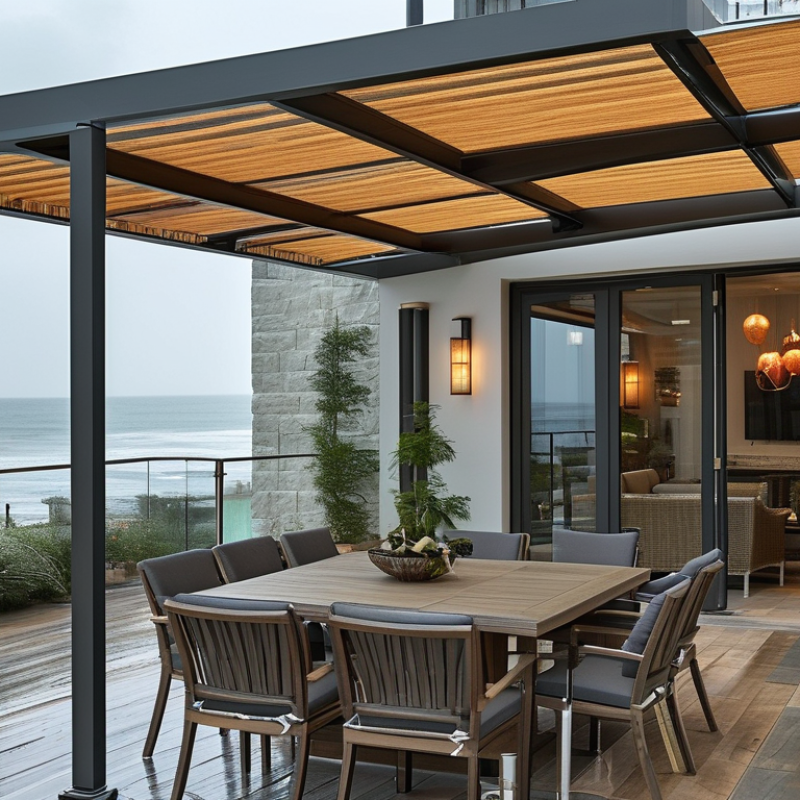
Fixed, Adjustable, and Bioclimatic Louvered Roof Panel Types
Fixed louvered roof panels provide steady shade, simple installation, and fewer moving parts. They suit car parks, walkways, and commercial terraces with predictable sunlight. However, fixed blades cannot respond to sudden rain or changing solar angles. This limitation matters in mixed climates. The UNEP Global Status Report for Buildings and Construction 2023 reported that buildings consumed about 32% of global energy and produced approximately 34% of global carbon emissions. Passive shading can support efficiency, but it cannot replace insulation, ventilation, or suitable glazing.
Adjustable panels use rotating blades to control daylight, airflow, and rain protection. Bioclimatic systems add sensors, motors, and automated responses. They may open during cool mornings, close during intense summer radiation, and redirect airflow beneath the roof. The International Energy Agency identifies cooling demand as a major driver of building electricity growth, especially in warm regions. Yet automation is not always perfect. Sensors can misread reflected light, while motors may require maintenance in dusty coastal environments.
Tips: Global buyers should check blade geometry, wind-load calculations, drainage paths, corrosion resistance, and control compatibility. Ask for tested performance data, not only attractive renderings. For coastal projects, specify suitable coatings and inspect fasteners regularly. A small manual override is still valuable when power fails. Think beyond the panel: local climate files, roof orientation, cleaning access, and technician availability often determine real performance.
Aluminum vs. Steel Panels: Weight, Span, and ASTM E330 Wind Testing
2026 Top Louvered Roof Panel Types for Global Buyers
Aluminum versus steel is not a simple strength contest. Density changes shipping, lifting, and frame loads. The Aluminum Association’s Aluminum Standards and Data lists aluminum near 2.70 g/cm³. The AISC Steel Construction Manual places structural steel near 7.85 g/cm³. For equal volume, steel weighs nearly 2.9 times more. That difference matters on a rooftop.
Span is less predictable. Alloy, temper, rib geometry, thickness, fastener spacing, and support conditions control panel stiffness. A thin aluminum louver may span less than a deeper steel section. Yet steel’s higher modulus, about 200 GPa versus aluminum’s roughly 69 GPa, can reduce deflection. Real projects often expose this gap. Catalog span tables are not field evidence.
ASTM E330/E330M evaluates structural performance under uniform static air-pressure differences. It measures deflection and permanent deformation. It does not create one universal wind rating. Design pressure should follow the governing local code, often ASCE 7-22 in the United States. Exposure, height, and corner zones matter. Ask for test pressure, span, supports, and residual deformation. A pass at 2.0 kPa may not suit a coastal corner. Buyers sometimes overtrust certificates. The test setup may differ from the installed roof.
2026 Top Louvered Roof Panel Types for Global Buyers — Aluminum vs. Steel Panels: Weight, Span, and ASTM E330 Wind Testing
Span and ASTM E330: Unsupported span is not a fixed material property; it depends on panel geometry, thickness, framing, deflection limits, and connection design. ASTM E330 evaluates the structural performance of a complete exterior window, door, or curtain-wall assembly under uniform static air pressure. The test pressure must therefore be specified and verified for the complete roof-panel system rather than inferred from aluminum or steel alone.
Motorized Louver Systems: IP65 Protection and 50,000-Cycle Performance
2026 Top Louvered Roof Panel Types for Global Buyers
Motorized louver systems suit buyers who want adjustable daylight, ventilation, and rain control. The key specification is IP65 protection. This rating indicates dust-tight housing and resistance to water jets from different directions. It does not mean the motor can operate underwater. Correct cable glands, sealed connections, and a sloped drainage design still matter.
A 50,000-cycle performance rating suggests extensive opening and closing endurance under defined test conditions. In practice, performance depends on panel weight, wind exposure, alignment, and maintenance. Ask suppliers for test methods, load data, operating temperatures, and replacement-part availability. A system may pass laboratory testing but behave differently beside a salty coast or in dusty farmland. That gap deserves attention.
Tips: Inspect motor seals before installation. Keep hinges clear of leaves and grit. Set wind sensors conservatively, especially on large roof spans. Request commissioning records and cycle-test evidence. Do not treat “50,000 cycles” as a guarantee; real service conditions are less tidy. A small alignment error can create noise, slower movement, or uneven pressure across the blades. Choose corrosion-resistant hardware, verify local electrical compatibility, and schedule periodic inspections. Even a well-designed IP65 enclosure cannot correct poor installation.
Weather and Fire Ratings: EN 13501-1, ASTM E84, and Drainage Loads
2026 Top Louvered Roof Panel Types for Global Buyers
Weather and fire performance deserve equal attention when selecting louvered roof panels. EN 13501-1 evaluates reaction to fire, including flame contribution, smoke, and burning droplets. ASTM E84 measures surface flame spread and smoke development. These systems are not direct equivalents. A strong result under one method cannot automatically replace the other. Buyers should request complete test reports, substrate details, thickness, and installation conditions.
Weather resistance involves more than a waterproof surface. Wind-driven rain, ultraviolet exposure, corrosion, and repeated opening cycles can affect long-term performance. Project reviews often reveal a weak detail: the panel passes testing, but the surrounding joints drain poorly. Small gaps matter. Inspect seals, flashing, gutters, and outlet locations together. Local climate data should guide the specification.
Drainage loads need careful structural review. A blocked outlet can create ponding water within minutes during heavy rainfall. The added weight may stress panels, beams, and connections. Engineers should check deflection, overflow paths, maintenance access, and emergency drainage. Snow or ice can add another load case in colder regions. Calculations should follow local codes and verified site conditions. A neat certificate is not enough. It may omit real installation weaknesses. Testing is valuable, but design judgment remains essential.
Global Buyer Criteria: ASCE 7 Wind Zones, CE Marking, and Warranty Terms
For 2026, global buyers should compare louvered roof panels by wind performance, compliance, and service terms. ASCE 7-22 does not provide one universal global wind zone. It uses site-specific wind speed, exposure category, roof geometry, and risk category. A supplier should provide stamped calculations, fastener schedules, and tested uplift values. “High wind” is too vague.
Weather risk is becoming harder to ignore. The World Meteorological Organization reported that 2024 was about 1.55°C above the pre-industrial average. Buyers in coastal or tropical regions may prefer corrosion-resistant aluminum panels, reinforced steel systems, or insulated sandwich panels. The correct choice depends on salt exposure, drainage, thermal movement, and maintenance access. I would not trust panel thickness alone.
For European projects, CE marking must match the applicable product rules and supporting technical documentation. The European Commission states that CE marking is a conformity declaration, not a general quality certificate. Request the Declaration of Performance, testing scope, and installation limitations. Warranty terms deserve the same scrutiny. Check structural coverage, coating failure, hardware corrosion, labor costs, exclusions, and required inspections. A 20-year warranty may cover finish only. That is easy to misunderstand. Coastal exclusions are common, but they should be written clearly. Some specifications still overlook local engineering review, which remains a practical weakness.
Sources: ASCE 7-22; World Meteorological Organization, State of the Global Climate 2024; European Commission, CE Marking Guidance.