2026 Top Refrigeration Unit Truck Types for Global Buyers

Choosing the right Refrigeration Unit Truck starts with the cargo, route, and delivery schedule—not just the truck’s size. A compact refrigerated van can serve urban shops with frequent stops, while a larger insulated box truck may suit regional distribution. For long-distance loads, buyers often compare tractor-trailers with multi-temperature compartments. Each type handles cooling demand differently.

Look closely at the workday. A driver opening the rear doors at a busy market faces different conditions from one carrying sealed pallets between depots. Door openings, ambient heat, cargo volume, and required temperature range all affect performance. So do insulation quality, airflow, service access, and fuel or energy use. Small details count. A poorly placed evaporator can leave warm pockets near the doors, even when the display shows the target temperature.

This guide introduces major truck types and the refrigeration systems commonly paired with them. It considers payload, operating range, maintenance needs, and practical trade-offs for global buyers. Not every specification tells the full story. Real performance depends on loading habits, climate, route conditions, and regular upkeep. Buyers should verify supplier claims against documented test data and local service support. One point deserves reflection: the most powerful unit is not automatically the best choice. Matching equipment to actual use can reduce wasted capacity and avoid costly surprises.
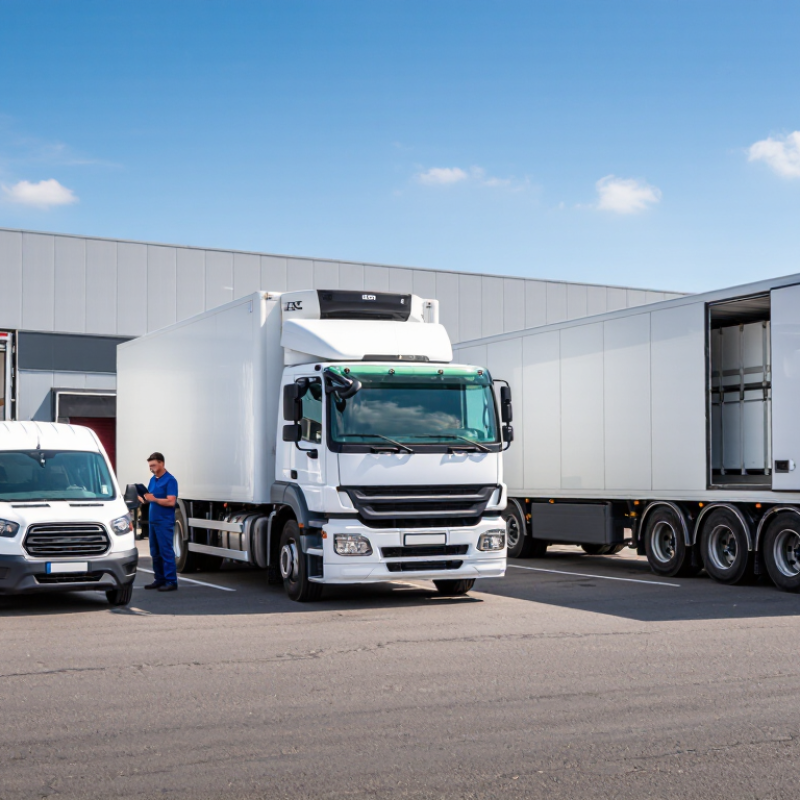
2026 Top Refrigeration Unit Truck Types for Global Buyers

How Refrigerated Trucks Maintain Cargo at Controlled Temperatures

2026 Top Refrigeration Unit Truck Types for Global Buyers

Refrigerated truck units maintain cargo temperatures by moving heat out of the insulated body. A compressor circulates refrigerant through the system, while an evaporator cools air inside the cargo space. A thermostat monitors conditions and signals the unit to adjust its operation. Common configurations include engine-driven systems for larger trucks, direct-drive units for smaller vehicles, and multi-temperature systems with divided compartments.

Stable air temperature does not guarantee every product is at the right temperature. Cargo should be pre-cooled before loading, since a truck unit is generally designed to maintain temperature, not rapidly cool warm goods. Leave space around vents, avoid blocking airflow with tightly stacked cartons, and limit door openings. Sensors also need regular checks; a poorly placed or uncalibrated sensor can give a misleading reading. Small details matter.

Tips: Check the cargo temperature before loading and record it. Keep the evaporator return-air path clear, and inspect door seals for gaps. During delivery, watch for repeated temperature changes. They may point to poor loading, frequent stops, or a system that needs attention. Even experienced operators can miss a blocked vent, so build a quick visual check into the routine.

Main Refrigerated Truck Types by Size and Payload

2026 Top Refrigeration Unit Truck Types for Global Buyers

Small refrigerated vans suit dense city routes, restaurant deliveries, and short trips. Their payload often ranges from about 500 to 1,500 kg, depending on the chassis and insulated body. They are easy to park. Light-duty refrigerated trucks offer more cargo space and may carry roughly 1 to 3 tonnes. They fit regional deliveries where streets remain narrow but loads are larger. These figures are indicative, not guaranteed.

Medium rigid trucks commonly serve supermarkets, food distributors, and longer regional routes. Their payload can range from around 3 to 8 tonnes. Heavy refrigerated trucks carry larger loads for high-volume transport, but need suitable loading access and turning space. Payload is not the same as refrigeration capacity. Insulation, door openings, ambient heat, and required cargo temperature all affect cooling performance. I have seen buyers focus on box volume and overlook these details; it is an easy mistake to make. Actual payload changes with vehicle configuration and local limits.

Tips: Compare usable payload after fitting the insulated body and refrigeration unit. Ask for temperature-recovery data under realistic loading conditions. Check door width, floor strength, and loading height, too. A bigger truck is not always the better choice.

2026 Top Refrigeration Unit Truck Types for Global Buyers – Main Refrigerated Truck Types by Size and Payload
Truck Type Typical Configuration Approx. Internal Cargo Body Size
(Length × Width × Height)
Typical GVW / Combination Weight Indicative Payload Common Applications
Compact Refrigerated Van Small van with insulated cargo compartment and refrigeration unit 2.3–3.5 m × 1.5–1.8 m × 1.3–1.9 m Approximately 2.5–3.5 t GVW Approximately 0.4–1.2 t Urban food delivery, catering supplies, and small chilled or frozen consignments
Large Refrigerated Van Long-wheelbase or high-roof van; body dimensions depend on the base vehicle 3.2–4.5 m × 1.7–2.0 m × 1.7–2.1 m Approximately 3.5–5.0 t GVW Approximately 0.8–1.8 t City and regional distribution, groceries, meal delivery, and temperature-sensitive parcels
Light Refrigerated Rigid Truck Two-axle rigid truck with a compact insulated box body 3.5–5.2 m × 1.9–2.2 m × 1.8–2.3 m Approximately 5–7.5 t GVW Approximately 1.5–3.5 t Local supermarket replenishment, restaurant supply, and regional fresh-food delivery
Medium Refrigerated Rigid Truck Two- or three-axle rigid truck, often with a multi-compartment body 5.0–7.2 m × 2.1–2.45 m × 2.0–2.5 m Approximately 7.5–12 t GVW Approximately 2.5–6 t Regional distribution of dairy, meat, produce, and other temperature-controlled goods
Heavy Refrigerated Rigid Truck Three- or four-axle rigid truck with a large insulated body 6.0–9.5 m × 2.3–2.5 m × 2.1–2.6 m Approximately 12–26 t GVW Approximately 5–15 t High-volume regional deliveries, wholesale distribution, and multi-drop transport
Refrigerated Semi-Trailer Combination Tractor unit pulling a refrigerated semi-trailer Trailer body: approximately 13.3–13.6 m × 2.45–2.5 m × 2.5–2.7 m Combination limits commonly fall around 33–40 t in many markets; local rules vary Approximately 18–27 t Long-distance and cross-border transport of large chilled or frozen loads

How to read these figures: Dimensions are indicative internal cargo-body measurements. Payload is an approximate operating range, not a guaranteed specification. Actual payload depends on chassis and body tare weight, insulation, refrigeration equipment, axle configuration, optional equipment, and local weight regulations. Always confirm permitted gross and axle weights for the destination market.

Refrigeration Systems and Power Options Available in 2026

2026 Top Refrigeration Unit Truck Types for Global Buyers
Refrigeration Systems and Power Options Available in 2026

Choosing a refrigeration system starts with the route, not the brochure. Engine-driven units draw power while the truck runs, making them practical for frequent deliveries. However, cooling may stop during long parking periods unless the unit has standby power. That detail matters. Independent diesel units can cool while parked, but add fuel use, weight, and maintenance needs.

Electric standby lets a truck connect to a suitable power supply at a depot. It can reduce engine runtime during overnight storage. All-electric systems may suit quieter urban routes, though actual operating range depends on outside temperature, insulation, door openings, and cooling demand. Multi-temperature bodies carry different products in separate zones. Their partitions take up space, and airflow needs careful checking. I would not assume one setup fits every route.

Tips: Match power options to daily driving and parking patterns. Check the available depot supply, expected summer temperatures, and service access before ordering. Record cargo temperature at several points during a trial. A door left open too long can undo a good specification.

Matching Truck Types to Cargo, Routes, and Temperature Needs

Choosing a refrigeration truck starts with the cargo, not the vehicle category. Small vans suit urban deliveries with frequent stops and modest loads. Their compact bodies are easier to maneuver, but limited insulation and payload can restrict longer routes. Small loads matter.

Medium refrigerated trucks offer more capacity for regional distribution. They can carry chilled produce, dairy, or frozen goods, provided the refrigeration system matches the required temperature range. Check the usable loading space, not just the stated body dimensions. Pallets, door openings, and evaporator placement all affect real capacity.

For high-volume or long-distance transport, heavy trucks and refrigerated trailers provide greater payload and storage flexibility. Multi-temperature compartments can separate chilled and frozen cargo, but partitions may reduce airflow or loading space. Route length, outside heat, delivery frequency, and time spent with doors open should guide equipment selection. A unit sized only for steady highway travel may struggle during hot, stop-and-go city work. That is easy to overlook. Ask suppliers for operating data under conditions similar to your routes, including ambient temperature and expected door openings. Also compare insulation quality, service access, and temperature monitoring options. A neat specification sheet can still mislead, so confirm the figures against your actual cargo and loading routine.

Global Buying Factors: Climate, Regulations, and Operating Costs

2026 Top Refrigeration Unit Truck Types for Global Buyers
Climate affects more than the unit’s cooling capacity. A truck crossing hot, humid routes may need extra reserve capacity and reliable door seals. Frequent stops also let warm air enter the cargo space. In colder regions, insulation and controlled defrost cycles deserve close attention. Small details matter.
Regulations vary by destination and can change over time. Buyers should check local requirements for refrigerants, noise, emissions, inspections, and temperature records before choosing equipment. A unit that meets one market’s standards may need adjustments elsewhere. Keep documentation practical and easy for drivers to use. Paperwork can become a weak point.
Operating costs include fuel or electricity, scheduled maintenance, repairs, and lost payload from heavy equipment. Ask suppliers for realistic consumption estimates under similar routes and loads, not just ideal test conditions. Service access matters too: a distant technician can turn a minor fault into hours of delay. Compare purchase price with expected running costs over several years. The estimate will still be imperfect. Pilot the configuration on a representative route, then review actual temperatures, fuel use, and repair records before expanding the fleet.