2026 Top Corundum Mullite Saggar Suppliers Worldwide

A Corundum Mullite Saggar may look like a simple kiln container, but its performance affects firing consistency, product yield, and replacement costs. Buyers comparing worldwide suppliers should look beyond catalog claims. Alumina content, bulk density, thermal-shock resistance, dimensions, and batch-to-batch variation all matter. So does the intended kiln cycle.

The upstream picture offers useful context, though not a direct measure of saggar demand. The U.S. Geological Survey’s Mineral Commodity Summaries 2025 estimates global bauxite production at about 430 million metric tons in 2024. Bauxite feeds alumina production, but this figure does not show how much material reaches refractory products. That distinction matters. Industry reports rarely isolate corundum-mullite saggars, so supplier comparisons should rely on product-level test data, not broad market forecasts alone.

Ceramic-fracture researcher Richard Bradt’s published work offers a practical reminder: ceramic reliability depends on flaws, stresses, and material behavior—not strength figures alone. Put plainly, “A strong test result is not a service-life guarantee.” This is an editorial paraphrase, not a verbatim quotation. For this 2026 supplier guide, we compare manufacturers by technical documentation, production consistency, customization, export experience, and after-sales support. Ask for firing-condition details and inspection records. Check whether sample dimensions match production orders. A polished datasheet is useful, but it cannot show how a saggar behaves after repeated kiln cycles. That part deserves scrutiny.
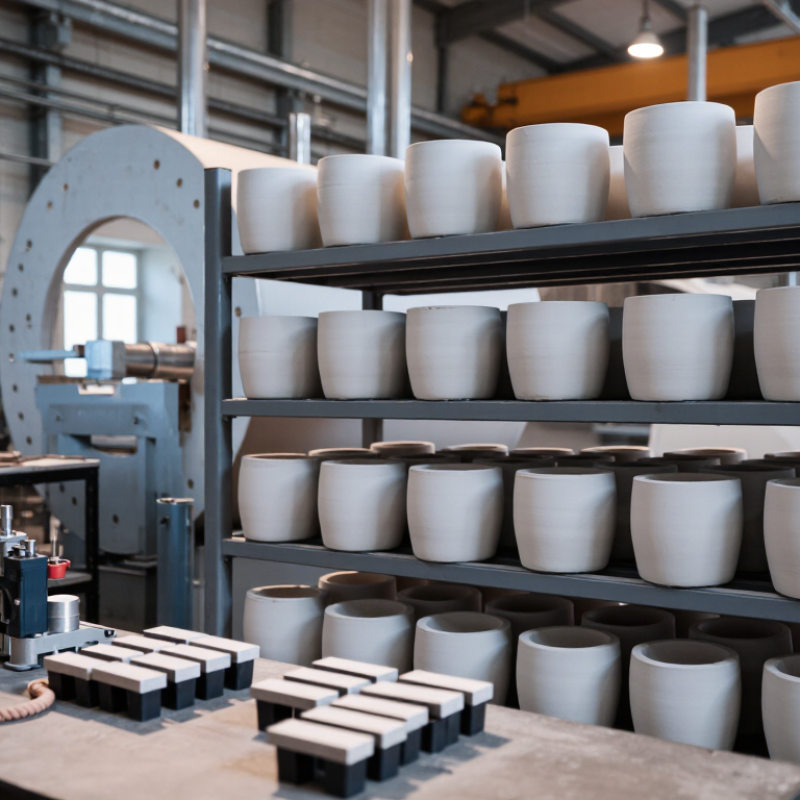
2026 Top Corundum Mullite Saggar Suppliers Worldwide

What Corundum Mullite Saggars Are and How They Are Used

Corundum mullite saggars are protective ceramic containers used inside kilns. They hold parts or powders during firing and help shield them from direct flame, dust, and uneven contact. Their structure combines corundum, a form of alumina, with mullite. This combination can provide strength and useful resistance to heat and thermal shock. Exact performance depends on the material recipe, wall thickness, and firing conditions.

A potter or kiln operator may place ceramic components, technical ceramics, or firing materials inside a saggar before loading it into the kiln. The container should match the load: too much weight can stress its base, while crowded contents may heat unevenly. Leave room for airflow where the process requires it. Small cracks matter. Inspect the rim and corners before use, and avoid sudden temperature changes during loading or cooling. These containers can reduce exposure to kiln debris, but they do not guarantee a clean surface or prevent every reaction between materials. Check compatibility with the contents and kiln atmosphere. In practice, keeping a simple record of load weight, placement, and firing cycle can reveal problems that a product description cannot. A saggar is useful, but it is not a substitute for careful firing.

Raw Materials and Manufacturing Processes

Corundum-mullite saggars begin with alumina-rich and silica-bearing materials, often including calcined alumina, mullite, and selected clay. The blend depends on firing temperature, load weight, and repeated heating cycles. A balanced particle-size distribution helps coarser grains lock together while finer particles fill gaps. Small details matter.

Raw materials are weighed, mixed, and formed with water or another suitable binder. Pressing can produce dense, consistent walls; casting may suit more complex shapes. Either way, uneven moisture can cause cracks during drying. Drying takes patience. A saggar that feels dry outside may still hold moisture inside.

After forming, pieces are dried thoroughly and fired to develop strength and thermal stability. Manufacturers monitor kiln temperature, heating rate, and final porosity because these factors affect service life. The ideal balance is not universal: very dense bodies may resist wear but handle temperature changes less readily. Trial batches and inspection after repeated firing can reveal weak corners, warping, or surface flaking. Even a careful process has variability, so material records and practical testing remain important.

Key Properties and Industrial Applications

Corundum-mullite saggars are designed for repeated exposure to high kiln temperatures. Their alumina-rich structure supports strength, while mullite helps the body retain stability during heating. That balance matters. In production, a saggar must carry its load without warping or cracking through repeated firing cycles. Its resistance to chemical attack can also help protect both the ware and the kiln furniture, though performance depends on the firing atmosphere and the materials inside.

These saggars are used in ceramic firing and in the thermal processing of technical ceramics, powders, and other heat-treated materials. A rigid, flat base helps keep parts level; a well-fitted lid can limit dust contamination. Small details matter. Wall thickness, porosity, dimensions, and loading weight all affect heat transfer and service life. The weak point is often thermal shock: rapid temperature changes can shorten a saggar’s life, even when its maximum-temperature rating appears suitable. Buyers should compare the actual firing schedule with the supplier’s test data and, where possible, trial a small batch. Specifications do not always predict shop-floor results perfectly.

2026 Top Corundum Mullite Saggar Suppliers Worldwide — Key Properties and Industrial Applications

Thermal reference points for corundum–mullite saggars and their principal oxide phases.

How to read the chart: Corundum–mullite saggars are used in high-temperature kiln processes; an approximate upper-use reference is 1,600°C, depending on grade and operating conditions. Mullite’s melting/decomposition temperature is about 1,850°C, while alumina melts at about 2,072°C. Phase temperatures are not recommended saggar operating temperatures.

Applications: Ceramic firing, technical-ceramic heat treatment, and kiln processing where reusable refractory setters help support ware and withstand repeated thermal cycles. Actual limits depend on composition, load, atmosphere, and firing cycle.

Major Supplier Regions Around the World in 2026

Major supplier regions often follow refractory-material and advanced-ceramic manufacturing clusters, rather than raw-material deposits alone. China is a major sourcing base, with broad capacity in formed refractories and established kiln-furniture production. The USGS Mineral Commodity Summaries 2025 estimates China produced about 85 million metric tons of alumina in 2024, compared with roughly 20 million in Australia. These figures describe alumina, not saggar output, but they help show the scale of nearby material supply. Buyers should still check whether a supplier makes corundum-mullite bodies in-house or relies on outside processing.

India offers another growing sourcing option, while Japan and South Korea are associated with high-specification technical ceramics. European suppliers, including production centers in Germany and Italy, can suit buyers seeking detailed process control or shorter regional delivery routes. The map is uneven. Public reports rarely count corundum-mullite saggar factories separately, so regional rankings should be treated as indicative, not definitive. Ask for firing-temperature records, wall-thickness tolerances, and sample saggars after repeated kiln cycles. A neat datasheet is useful; a chipped corner after service tells a different story.

2026 Top Corundum Mullite Saggar Suppliers Worldwide - Major Supplier Regions Around the World in 2026

Supplier Region Representative Countries Relevant Industrial Base Typical Sourcing Considerations Common Applications
East Asia China, Japan, South Korea Established ceramics, refractories, and advanced-materials manufacturing industries. China has a broad industrial ceramics supply base; Japan and South Korea have developed technical-ceramics sectors. Confirm the actual alumina and mullite composition, maximum recommended service temperature, thermal-shock performance, dimensions, and production tolerances. Request test data for the specific grade offered. Powder and technical-ceramic firing, heat treatment, and other kiln processes requiring reusable high-temperature containers.
South Asia India A substantial ceramics and refractory manufacturing sector supports domestic and export-oriented industrial supply. Check batch-to-batch consistency, dimensional stability, firing history, packaging, and export documentation. Compare quoted properties against the intended kiln atmosphere and firing cycle. Ceramic production, industrial firing, and applications where refractory containers are used to protect or separate ware.
Western and Central Europe Germany, France, Italy, and neighboring European markets Long-established refractory, kiln-technology, and industrial-ceramics industries serve a range of high-temperature processes. Ask for technical datasheets, applicable quality documentation, traceability information, and confirmation that the offered product is specifically a corundum-mullite saggar rather than a different kiln-furniture grade. Industrial ceramics, laboratory and technical-ceramic firing, and other controlled kiln operations.
North America United States, Canada Industrial ceramics, refractory materials, and kiln-related supply chains serve manufacturing, research, and processing users. Clarify whether the product is made locally or imported. Evaluate lead time, replacement availability, shipping damage protection, and compatibility with the kiln’s operating conditions. Technical ceramics, research and development, heat treatment, and industrial kiln use.
Other established ceramics markets Selected countries in Southeast Asia and other regions Local ceramics and manufacturing activity may support regional distribution or production, but product availability varies by country and grade. Verify manufacturing origin, material composition, available dimensions, minimum order quantity, and whether performance data apply to the exact item being purchased. Regional ceramic production and other high-temperature processes, subject to local product availability.

Regional overview for 2026. This is a qualitative guide to relevant manufacturing and sourcing regions, not an audited supplier census or a ranking by supplier count. Confirm product specifications and suitability directly with the manufacturer before purchase.

How to Evaluate and Select a Reliable Supplier

A reliable corundum-mullite saggar supplier should show how its product performs in your kiln, not just quote a maximum service temperature. Share your firing curve, cycle frequency, atmosphere, load weight, and saggar dimensions. Then request batch-specific test results for bulk density, apparent porosity, and dimensional tolerance. ASTM C20 provides a recognized method for measuring porosity and bulk density in refractory bricks, though it does not replace testing the finished saggar under your actual conditions. Ask for a pilot batch. Inspect the fired pieces for warping, edge cracks, and fit.

Check raw-material traceability and consistency between batches. The USGS Mineral Commodity Summaries 2025 estimates global bauxite production at about 430 million metric tons in 2024. That broad supply figure offers context, not proof of suitable high-purity alumina or saggar quality. Ask suppliers to document material grades, production controls, inspection records, and packaging tests. Request references from comparable kiln operations, and confirm lead times against your firing schedule. Freight damage matters. A supplier may provide polished test data, yet real kiln performance can still vary with loading and thermal cycling. That uncertainty deserves a trial, not an assumption.