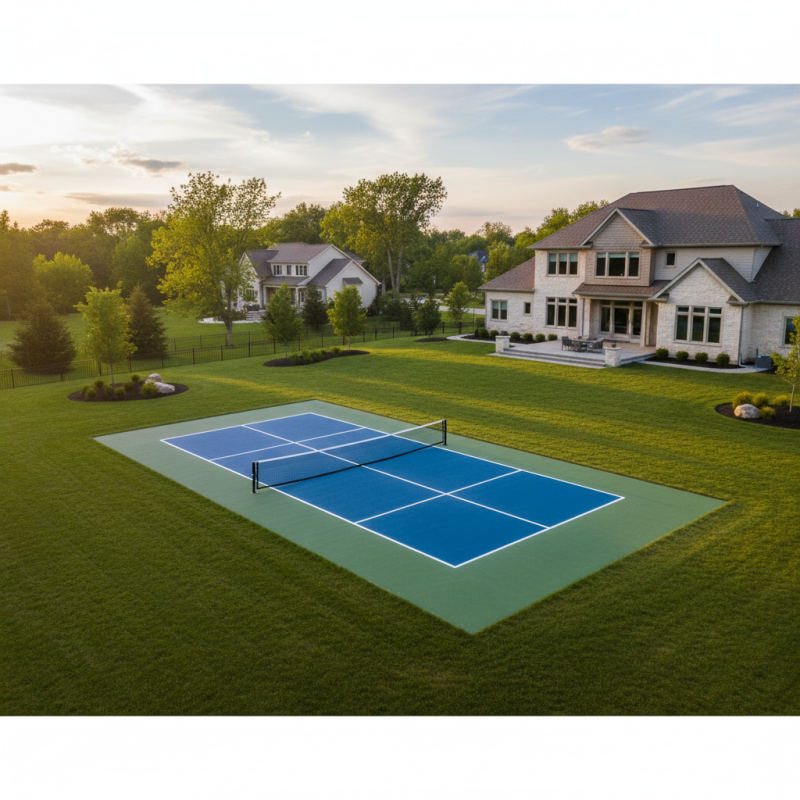
How to Build a Pickleball Sports Court for Your Home?
Building a pickleball sports court at home can be an exciting project. According to Dave McGraw, a seasoned pickleball coach, "A backyard court transforms your space into a sports haven." This statement highlights the joy and functionality a personalized court can bring.
Creating a pickleball sports court requires careful planning and execution. First, choose the right location. A flat, spacious area is ideal. Consider the dimensions needed for a standard court: 20 by 44 feet for doubles play. Surrounding space can enhance the experience, offering room for players to move freely.
Materials also matter. Quality surfacing, such as asphalt or concrete, ensures durability. Net systems and proper markings are essential for authentic gameplay. Reflecting on costs and maintenance is crucial, as a well-built court demands ongoing care. A pickleball sports court can elevate your home, but it requires thoughtful investment and attention.
Understanding the Basics of a Pickleball Court Design
Designing a pickleball court requires an understanding of specific dimensions and materials. A standard pickleball court measures 20 feet wide and 44 feet long. The space should be free of obstructions, ensuring a buffer area of at least 10 feet around the court. According to the USA Pickleball Association, maintaining these dimensions is critical for safety and gameplay quality.
Choose a hard surface, like asphalt or concrete. These materials provide optimal durability and gameplay conditions. Consider painting lines using reflective paint to enhance visibility during games. Some reports suggest that quality court surfaces can improve player performance by up to 30%. Think about orientation; position the court north-south to minimize glare.
Tips:
- Test various surface types to find what suits your style best.
- Use non-slip coatings to enhance safety.
- Gather community feedback on your design for broader acceptance.
Lastly, remember that building a court can have its challenges. Regional climates might affect the longevity of your chosen materials. It's essential to conduct thorough research and potentially consult professionals. The more informed your decisions, the better the outcome of your court project.
Choosing the Right Location for Your Home Court
Choosing the right location for your pickleball court is crucial. Look for a spot that offers good drainage and is away from trees. Overhanging branches can cause delays in play and lead to court maintenance issues. An area with ample sunlight is ideal, as it enhances visibility during matches.
Consider the orientation of your court. If possible, align it north-south to minimize glare from the sun. This can make a significant difference in your playing experience. You’ll also want to ensure there is enough space around the court for players to move freely. Aim for a buffer zone of at least 10 feet on all sides.
Sometimes, a perfect location may pose challenges. Noise from nearby roads or neighbors could be distracting. Think about how to manage these distractions. Installing sound barriers may help, but they might not completely solve the issue. Be prepared to adjust your plans based on what you discover at different sites. Finding the right location is about balancing ideal conditions with practical compromises.
Essential Materials and Tools Needed for Construction
When building a pickleball court, choosing the right materials is crucial. A standard size court measures 20 feet wide by 44 feet long for doubles play. Asphalt and concrete are popular choices for the surface, providing durability and a smooth finish. According to a report from the Sports and Fitness Industry Association, outdoor sports surfaces can affect play. Hence, investing in proper surfacing is essential.
For a DIY project, essential tools include a concrete mixer, trowels, and a level. The total cost can vary. Some reports estimate it ranges from $15,000 to $25,000 for a complete setup. This includes fencing and equipment. Consider spending time on site preparation to ensure a solid foundation. A well-prepared base can prevent future issues, such as cracks or uneven surfaces.
Choosing the appropriate net system is equally important. Durable nets can withstand weather conditions and frequent use. Pay attention to net tension; it directly influences gameplay. Misaligned or loose nets can lead to frustration during matches. Be mindful of local zoning laws and space requirements as well. Overlooking these factors might lead to delays or complications in installation.
Step-by-Step Construction Process for Your Pickleball Court
Building a pickleball court at home can be an exciting project. The first step is to select the location. A level area of at least 30 feet by 60 feet is ideal. Clear the space of any debris. Ensure proper drainage to prevent water buildup. Consider the sun’s position for a comfortable playing experience.
Next, mark the dimensions of your court. Pickleball lines are crucial for play. The court measures 20 feet wide and 44 feet long for doubles. Use chalk or paint to outline the lines. The net height is 36 inches at the sidelines and 34 inches at the center. Check online guides for precise measurements.
Surface material plays a significant role. Studies show that the best surfaces are asphalt or concrete. These materials provide good ball bounce and durability. If your budget allows, consider adding a cushioned surface for player comfort. Keep in mind that factors like wind and weather can affect playability. Over time, you might need to repaint the lines as they can fade. Regular maintenance is key to a long-lasting court.
How to Build a Pickleball Sports Court for Your Home? - Step-by-Step Construction Process for Your Pickleball Court
| Step | Description | Materials Needed | Estimated Cost ($) | Time Required (Hours) |
| 1 | Choose the Location | None | 0 | 1 |
| 2 | Measure and Mark the Court Area | Measuring Tape, Chalk | 20 | 2 |
| 3 | Excavate the Area | Shovel, Wheelbarrow | 100 | 4 |
| 4 | Set the Base Layer | Gravel, Sand | 150 | 3 |
| 5 | Install the Surface | Court Surface Material (e.g., asphalt, concrete) | 1000 | 8 |
| 6 | Install Fencing and Net Posts | Fencing Material, Net Posts | 500 | 4 |
| 7 | Paint Court Lines | Line Paint | 50 | 2 |
| 8 | Install Net | Pickleball Net | 75 | 1 |
| 9 | Final Inspection and Adjustments | None | 0 | 2 |
Maintenance Tips to Keep Your Pickleball Court in Top Shape
Maintaining a pickleball court is crucial for optimal play. Regular inspection is essential. Keep an eye out for cracks and surface wear. According to a report by the Sports and Fitness Industry Association, more than 4.2 million players enjoyed pickleball in 2020. Proper upkeep ensures the experience remains enjoyable for all.
Cleaning the court surface regularly can enhance grip and reduce injury risks. Use a soft broom or blower to remove debris. Wetting the court with a mixture of water and mild detergent can help keep it clean. Many courts suffer from algae growth, especially in shady areas. This not only affects playability but also can lead to slipping hazards.
Investing in quality materials might seem expensive. However, it pays off in the maintenance realm. Research shows that courts constructed with high-quality, weather-resistant materials last longer. Unexpected weather conditions can take a toll on the surface. Regular maintenance checks can help identify small problems before they become significant repairs, ensuring consistent gameplay quality.
Pickleball Court Maintenance Activities