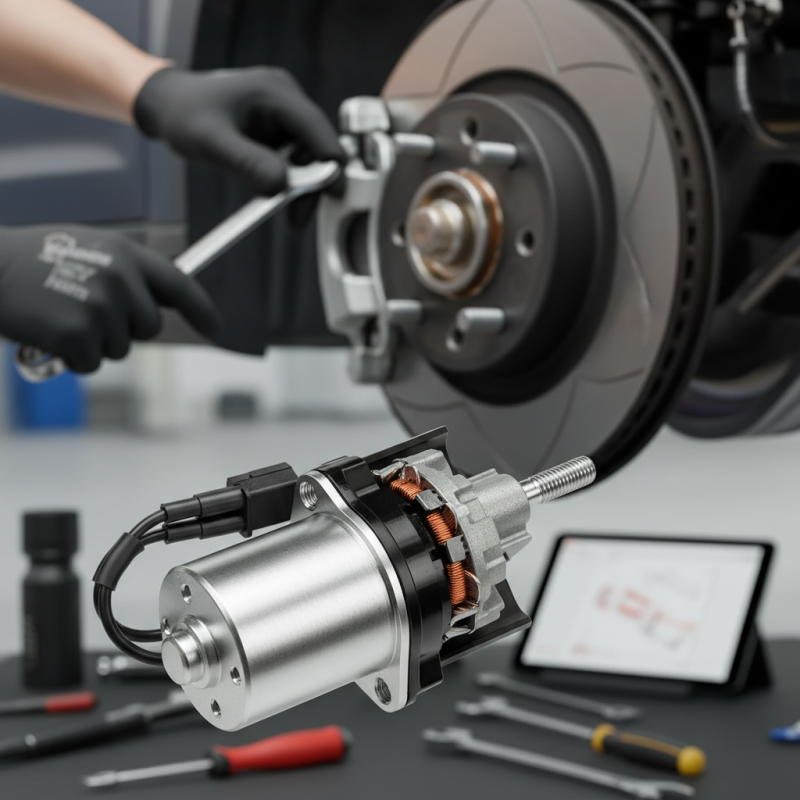
What is an Electric Parking Brake Motor and How Does It Work?
The Electric Parking Brake Motor is a vital component in modern vehicles. It automates the parking brake's application and release, enhancing convenience and safety. This technology replaces traditional mechanical systems, offering improved reliability and efficiency.
Using electrical signals, the Electric Parking Brake Motor engages the brakes when needed. However, the technology isn’t without its flaws. Occasional malfunctions can occur, leading drivers to question its reliability. Understanding how this motor works is essential for both drivers and automotive professionals.
Proper maintenance and awareness of this system can prevent issues. As vehicles become more advanced, grasping the complexities of the Electric Parking Brake Motor is increasingly important. It represents a shift towards automated vehicle functions, highlighting the need for continuous learning in automotive technology.
What is an Electric Parking Brake Motor?
An electric parking brake motor is an innovative component in modern vehicles. It serves a critical function by engaging and disengaging the parking brake electronically. This motor replaces traditional manual systems, offering better reliability and convenience. Drivers no longer need to pull a lever or push a pedal; they simply press a button to activate the brake.
One key advantage of the electric parking brake motor is its precision. It responds quickly and efficiently to the driver's commands. However, this technology is still relatively new, and not all systems are infallible. Some users report inconsistencies, such as delayed responses or malfunctions. Regular maintenance and software updates are essential to ensure optimal performance.
The electric parking brake motor also allows for more space-efficient designs within vehicles. Manufacturers can eliminate bulky mechanical components, leading to sleeker interiors. Yet, these systems may require specialized knowledge for repairs. Mechanics trained in traditional brake systems may need additional learning to work on these advanced mechanisms. This evolving technology highlights the need for ongoing education in the automotive field.
What is an Electric Parking Brake Motor and How Does It Work?
| Feature | Description |
| Function | Engages and disengages the parking brake electronically. |
| Components | Includes a motor, control module, and a mechanical actuator. |
| Operating Principle | The motor receives signals from the control module to apply or release the brake. |
| Advantages | Provides convenience, reliability, and allows for advanced features such as hill hold. |
| Disadvantages | Potential for electrical failure, which may prevent brake engagement or release. |
| Common Applications | Used in modern vehicles, especially in electric and hybrid cars. |
| Maintenance Tips | Regularly check the brake system for errors and ensure the battery is in good condition. |
Key Components of Electric Parking Brake Systems
Electric parking brake systems have gained popularity due to their convenience and enhanced safety. Key components in these systems include the electric parking brake motor, control module, and various sensors. Each of these parts plays a crucial role in the overall function and reliability of the system.
The electric parking brake motor is responsible for engaging and disengaging the brake. It works by pulling a cable or applying a direct force to the brake mechanism. The control module orchestrates this process by receiving signals from the driver inputs and sensors. Sensors monitor critical aspects, such as vehicle speed and brake engagement, ensuring that the system operates safely under different conditions.
These components must work in harmony. Any malfunction can lead to issues. For instance, a faulty motor may not engage the brakes properly, affecting safety. It's essential that manufacturers rigorously test these components for optimal performance and reliability. Regular maintenance checks can help identify potential problems early, improving overall vehicle safety.
How Electric Parking Brake Motors Operate: A Technical Overview
Electric parking brake motors play a key role in modern vehicles. They are responsible for engaging and releasing the parking brake system electronically. This mechanism replaces the traditional cable-driven models. With advancements in technology, these motors provide enhanced safety and convenience.
The operation of an electric parking brake motor involves several components. When the driver activates the brake, an electronic control unit sends signals to the motor. This motor then engages or disengages the brake calipers. Typically, this process occurs quickly, often within a second. Feedback mechanisms are essential to ensure the system operates correctly. These motors rely on precise sensors to confirm the brake's status.
However, challenges can arise. Sometimes, the system may fail to engage or release properly. This might be due to electrical issues or mechanical wear. Drivers may feel a difference in performance. Regular maintenance is crucial to prevent such problems. Monitoring warning lights on the dashboard can indicate if the motor is malfunctioning. Awareness and timely checks can improve safety and reliability.
Industry Standards and Regulations for Electric Parking Brakes
Electric parking brakes (EPBs) have become increasingly popular in modern vehicles. Their design allows for more efficient use of space and improved functionality. However, these systems must comply with industry standards and regulations to ensure reliability and safety. Regulatory bodies establish guidelines for performance, durability, and electromagnetic compatibility. Adhering to these regulations is crucial for manufacturers to gain consumer trust.
Standards such as ISO 26262 focus on functional safety in automotive systems, including EPBs. Electric parking brakes must be tested for various scenarios to ensure they function correctly under different conditions. For example, an EPB needs to engage securely on inclines. This often requires extensive testing and validation to meet safety benchmarks. Still, not all manufacturers may meet these guidelines consistently.
The integration of electric parking brakes in vehicles also raises challenges, particularly with software reliability. Since these systems rely on electronic controls, software glitches can render the parking brake inoperative. This raises doubts about the effectiveness of some current systems. Manufacturers must continually improve their processes, ensuring they maintain high standards while innovating new technologies. Addressing these issues is essential for the future of electric parking brakes in the automotive industry.
Trends in Electric Parking Brake Technology and Future Developments
Electric parking brakes (EPB) have significantly evolved in recent years. The shift towards electronic systems is evident in many new vehicle models. EPBs offer smoother operation and enhanced convenience over traditional handbrakes. They use a motor to engage and disengage the brake mechanism electronically. This shift has allowed for better integration with vehicle systems, enhancing overall performance.
Current trends highlight a focus on automation and driver assistance. Manufacturers are developing EPBs that respond to various driving conditions. For instance, some systems automatically apply the brake on a slope. This feature helps prevent roll-back, improving safety. Future developments may include integration with autonomous driving systems. Such advancements will rely on refined technology and reliable sensors.
However, challenges remain. EPBs can sometimes malfunction, leading to concerns about reliability. Maintenance of electrical components also poses a dilemma for some vehicle owners. Regular inspections are crucial to ensure the system functions properly. As technology progresses, addressing these issues will be essential for widespread acceptance. Balancing innovation with reliability remains a key focus for manufacturers.