Top 10 Agricultural Drones for Efficient Farming Solutions?
Agricultural Drones are transforming modern farming. These innovative technologies enhance efficiency and productivity on farms. With a range of capabilities, they can monitor crops, assess health, and optimize resource usage.
Farmers face numerous challenges today. Drones can provide real-time, actionable insights. However, not all drones are suitable for every type of farming. Selecting the right model is crucial. Some models excel in crop monitoring, while others focus on precision spraying. Each drone has its strengths and weaknesses.
The market is evolving quickly, and knowledge is power. Researching and comparing various agricultural drones can be daunting. It requires an understanding of their features, costs, and potential applications. These decisions can make a significant difference in farming outcomes. Embracing this technology is essential, yet it demands careful consideration and reflection on specific farming needs.
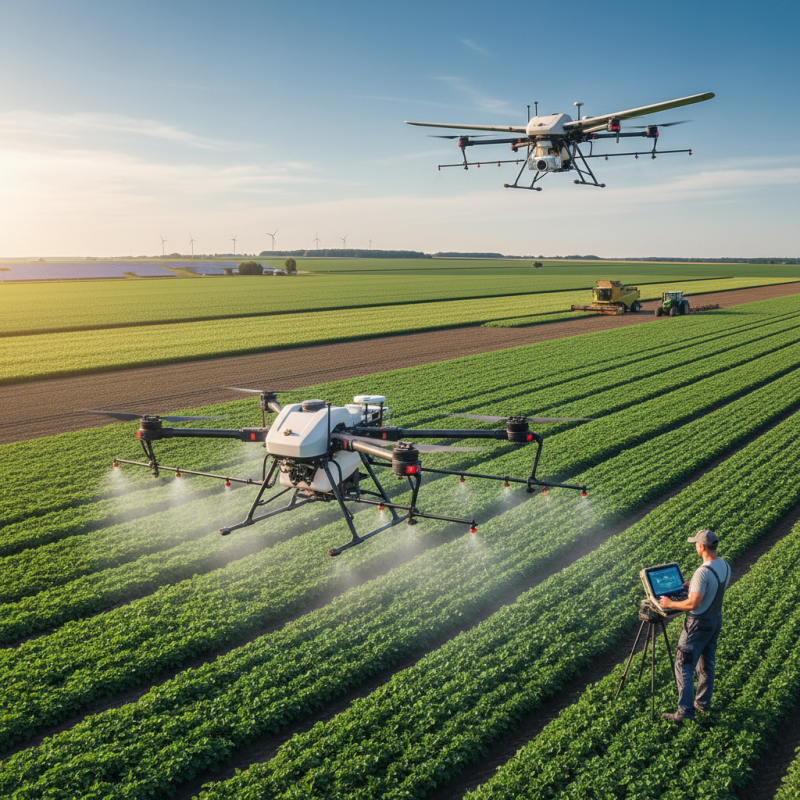
Overview of Agricultural Drones and Their Importance in Farming
Agricultural drones are becoming crucial in modern farming. Farmers face challenges like crop health monitoring and resource management. Traditional methods often lead to inefficiencies and overspending. Drones offer a solution by providing real-time data and insights into crop conditions. According to a report from MarketsandMarkets, the agricultural drone market is expected to reach $6.5 billion by 2026, emphasizing its growing importance in the industry.
These drones utilize advanced sensors and imaging technology. High-resolution imagery helps identify pest infestations, nutrient deficiencies, and irrigation issues early on. A study by the University of California found that drone technology can increase crop yields by up to 10%. However, integrating drones into existing farming practices requires training and investment. Some farmers may struggle with the initial adaptation process, leading to mixed results in efficiency.
The significance of data analytics cannot be ignored. Drones collect vast amounts of information, enabling farmers to make informed decisions. Yet, many lack the expertise to interpret this data effectively. This gap highlights the need for better training programs. While the potential of agricultural drones is immense, realizing this potential necessitates overcoming certain hurdles in technology adoption and skill development.
Key Features to Consider When Selecting Agricultural Drones
When selecting agricultural drones, understanding key features is essential. First, consider the drone's payload capacity. A robust drone can carry essential sensors and cameras. This directly impacts data collection efficiency. A high-resolution camera can capture detailed images of crops. This quality aids in identifying issues like pest infestations.
Another critical feature is flight time. Longer flight durations allow drones to cover larger areas in a single trip. Efficient mapping and surveying depend on this capability. Connectivity options also matter. A drone with reliable software integration simplifies data analysis. It ensures smooth operation and enhances productivity.
Durability should not be overlooked. Drones face harsh outdoor conditions. Those made from tough materials withstand impacts better. Weather resistance extends their lifespan. However, no drone is perfect. Maintenance can be a challenge. Regular check-ups are necessary to maintain peak performance. Flaws in technology or design might arise. Users should regularly update their knowledge to avoid potential pitfalls.
Top 10 Agricultural Drones: Detailed Specifications and Capabilities
Drones have transformed modern agriculture. Farmers now rely on aerial technology for precision farming. These devices offer unique specifications that enhance efficiency. Some can map fields, monitor crop health, and even apply fertilizers. The integration of multispectral cameras helps analyze soil conditions. This data can lead to better decision-making.
Several models focus on flight time. A longer battery life means more area can be covered. Some drones provide detailed reports in real time, assisting farmers in immediate assessments. However, users often find the software challenging. Learning curves can deter optimal use. Communication between drones and farmers sometimes falters.
Price can also be a barrier. High-tech options may seem unaffordable. Yet, investments in these technologies typically yield significant returns. The initial costs may seem daunting, but the potential benefits are worth considering. Optimizing yields and reducing waste are critical goals for farmers today. Despite the challenges, adopting drone technology often proves beneficial in the long run. Each choice must be made after careful thought and assessment of specific farming needs.
Comparative Analysis of the Best Drones for Precision Farming
Agricultural drones have revolutionized farming practices. These tools aid in precision agriculture by collecting data on crop health and soil conditions. They offer real-time monitoring, which allows farmers to make informed decisions. Different drones come with various features tailored for specific agricultural tasks. Understanding each model's strengths and weaknesses is crucial.
Some drones excel in thermal imaging. They effectively identify water stress in plants. Others focus on mapping and surveying large fields. The camera quality and flight time are vital aspects to consider. These factors greatly impact efficiency. However, not all drones can handle diverse farming environments. Choosing the right drone requires assessing the unique needs of each farm.
Farmers must reflect on their specific objectives. Not every drone will meet all requirements. It's essential to balance cost with functionality. Investing in the wrong technology can lead to wasted resources. Ultimately, selecting the most suitable drone can enhance productivity and sustainability in farming practices.
Future Trends in Agricultural Drone Technology and Innovation
Agricultural drone technology is rapidly evolving. Recent reports indicate that the global agricultural drone market is projected to reach $6.5 billion by 2027, growing at a CAGR of 32%. This surge reflects the increasing reliance on drone-powered data collection techniques in crop management and precision agriculture. But many farmers still struggle with integrating these innovations effectively.
Future trends suggest increased use of AI and machine learning in drone technology. This allows for real-time data analysis and better crop monitoring. For instance, drones can now identify plant diseases early, a crucial factor in preventing yield loss. However, not all farmers are equipped to analyze and interpret this data. The learning curve remains steep, deterring some from adopting these advancements.
Moreover, regulatory challenges may hinder progress. The FAA continues to develop guidelines for drone use in agriculture, which can slow down implementation. Balancing innovation with safety standards is essential but can create uncertainty. Understanding these aspects will be key for farmers looking to leverage drone technology. Embracing innovation while addressing these obstacles is essential for the future of agriculture.
