
Top 10 Study Furniture Suppliers for Global Buyers
Choosing Study Furniture for a school, university, or home-learning project means balancing comfort, durability, price, and delivery. Global buyers also need to check materials, dimensions, customization options, and after-sales support. A desk may look sturdy in a product photo, yet arrive with a thin top or awkward cable routing. Details matter.
Ergonomic designer Niels Diffrient is often credited with the line, “The best posture is the next posture.” It captures a useful principle: learners benefit from furniture that supports movement and adjustment, not just a fixed sitting position. For buyers, that means comparing chair height, lumbar support, desk clearance, and the feel of moving parts. Small checks. Fewer surprises.
This guide presents ten suppliers for international buyers to investigate, from established manufacturers to providers with flexible product ranges. The list is a starting point, not a guarantee of quality or the right fit. Supplier capabilities, shipping terms, lead times, and product specifications can change by market and project. Request current documentation, inspect samples when practical, and confirm measurements before placing a large order. Even careful comparisons leave room for doubt; a promising catalog cannot show how a chair feels after a full school day. Use the profiles that follow to build a shortlist, ask sharper questions, and match each supplier to your actual learning spaces.
Study Furniture and the Global Supplier Landscape
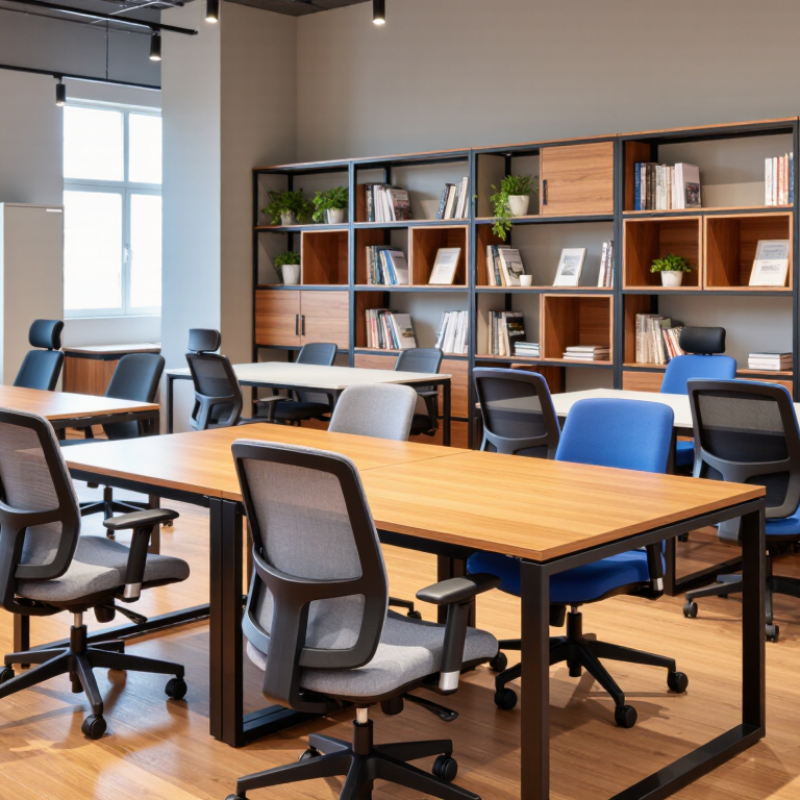
The global study-furniture market is not one uniform supply chain. Suppliers may specialize in classroom desks, library tables, compact dormitory storage, or adjustable workstations. Production capacity, material access, and finishing methods vary by region. A steel frame can look identical in a catalog, yet differ in weld consistency, edge treatment, and packaging protection. Those details affect daily use and freight damage. Fit matters.
For global buyers, supplier evaluation should begin with documented specifications, not attractive product images. Confirm dimensions, load ratings, surface materials, carton size, replacement-part availability, and inspection procedures. Ask for samples or clear photographs of joints, drawer runners, and underside fittings. Delivery estimates should include production time, port handling, and inland transport. Communication matters too: a supplier who flags a measurement conflict early is often more useful than one who simply agrees. Sample finishes may still vary slightly from bulk production, despite careful checks. Check twice.
Tips: Share room plans and user needs before requesting quotes. Compare total landed cost, not unit price alone. Keep an approved sample and a signed specification sheet. Check that packing protects corners and hardware. If a detail feels uncertain, ask again; buyers sometimes overlook this step.
| Supplier Profile | Typical Production Base | Common Study Furniture | Typical Materials | Supply Strength | Indicative MOQ | Indicative Lead Time | Buyer Considerations |
|---|---|---|---|---|---|---|---|
| 01. High-volume OEM furniture producer | China | Student desks, chairs, bookcases, and classroom sets | Powder-coated steel, particleboard, MDF, and plastic components | Broad product ranges and established export-manufacturing infrastructure | Often 100–500 units per model | Approximately 30–60 days after order confirmation | Confirm product testing, packaging strength, customization limits, and shipping terms. |
| 02. Wood-focused furniture manufacturer | Vietnam | Study desks, bookcases, shelving, and home-office furniture | Solid wood, plywood, MDF, and wood veneer | Suitable for wood-furniture programs and export-oriented production | Often 100–300 units per model | Approximately 35–70 days, depending on materials and finish | Check wood species, moisture control, finish specifications, and sourcing documentation. |
| 03. Flat-pack and ready-to-assemble supplier | China and Southeast Asia | Knock-down desks, compact bookcases, and student storage units | Particleboard, MDF, steel fittings, and engineered-wood panels | Space-efficient packing and products designed for parcel or retail distribution | Often 200–500 units per model | Approximately 30–60 days | Review assembly instructions, hardware completeness, carton dimensions, and damage rates. |
| 04. School and institutional furniture producer | China, India, and other regional manufacturing hubs | Classroom desks, stackable chairs, teacher desks, and storage | Steel tubing, molded plastic, plywood, and laminate surfaces | Can supply coordinated furniture sets for education projects | Often 100–500 units, with project-based orders possible | Approximately 30–75 days | Specify safety requirements, dimensions, load ratings, and local education standards. |
| 05. Ergonomic task-chair specialist | China, Taiwan, and regional assembly markets | Adjustable study chairs, task chairs, and student seating | Steel or aluminum bases, molded plastic, mesh, and upholstery | Offers adjustment features and a wider range of chair mechanisms | Often 100–300 units per configuration | Approximately 30–60 days | Check adjustment range, stability, upholstery durability, and applicable chair-testing standards. |
| 06. Metal-frame desk and storage supplier | China, India, and Türkiye | Steel-frame desks, filing units, shelving, and worktables | Powder-coated steel, laminate panels, and engineered wood | Useful for durable frames and institutional or commercial applications | Often 100–500 units, depending on design | Approximately 25–60 days | Confirm coating quality, corrosion protection, weld finish, and packaging for metal parts. |
| 07. Solid-wood and craft-oriented workshop | Indonesia and other wood-producing regions | Wooden study desks, bookcases, and decorative storage | Solid wood, plywood, and wood-based panels | Can support wood-forward designs and smaller, differentiated product lines | Often 50–200 units per model | Approximately 45–90 days | Verify timber legality, species availability, finish consistency, and production capacity. |
| 08. Modular storage and shelving supplier | China, Malaysia, and other Asian manufacturing centers | Bookcases, desk organizers, modular shelves, and drawer units | Steel, particleboard, MDF, and molded plastic | Offers configurable components for home-study and student-storage ranges | Often 200–500 units per model | Approximately 30–60 days | Assess anti-tip provisions, wall-fixing hardware, dimensional tolerances, and assembly needs. |
| 09. Regional custom-furniture fabricator | Europe, North America, and local markets worldwide | Made-to-order desks, shelving, and fitted study furniture | Solid wood, plywood, MDF, metal, and locally sourced materials | Closer communication, regional delivery, and greater flexibility for custom dimensions | Often 1–50 units, depending on the workshop | Approximately 2–12 weeks, depending on design and workload | Request drawings, material samples, installation details, and a written production schedule. |
| 10. Sustainable-material furniture supplier | Europe and Asia | Desks, chairs, shelves, and study accessories using recycled or certified materials | Recycled plastic, responsibly sourced wood, bamboo, and recycled metal | Can support buyers seeking documented material and environmental attributes | Often 100–500 units, depending on product and material | Approximately 35–75 days | Request current certification scope, chain-of-custody evidence, and clear recycled-content documentation. |
| Note: These are anonymized supplier profiles, not named or ranked companies. MOQ and lead-time figures are indicative planning ranges only; actual terms vary by product, order size, customization, season, and destination. Verify specifications, compliance, and delivery schedules directly with prospective suppliers. | |||||||