What Are the Top Types of Undermount Kitchen Sinks?

An Undermount Kitchen Sink can change how a kitchen looks and works. Its rim sits beneath the countertop, leaving a smooth edge for wiping crumbs straight into the basin. But the right choice depends on more than appearance. Cabinet width, counter material, cooking habits, and cleanup routines all matter.

Interior designer Nate Berkus has said, “Your home should tell the story of who you are, and be a collection of what you love.” That idea fits sink selection, too: a busy household may value a deep single bowl, while a frequent meal-prepper may prefer divided basins. Stainless steel is practical and familiar. Fireclay brings a substantial, classic look. Granite composite can offer a textured surface and muted colors. Each has trade-offs, including maintenance, weight, and resistance to marks.

There is no perfect sink for every kitchen. Not even close. A wide basin can swallow roasting pans, yet leave little room for separating tasks. Double bowls add flexibility, but large cookware may feel awkward. These details are easy to miss in a showroom. This guide compares the top types of undermount kitchen sinks, explains where each performs well, and highlights what to check before choosing one. One caution: a beautiful sink can still disappoint if its size or installation requirements do not suit the counter and cabinet beneath it.
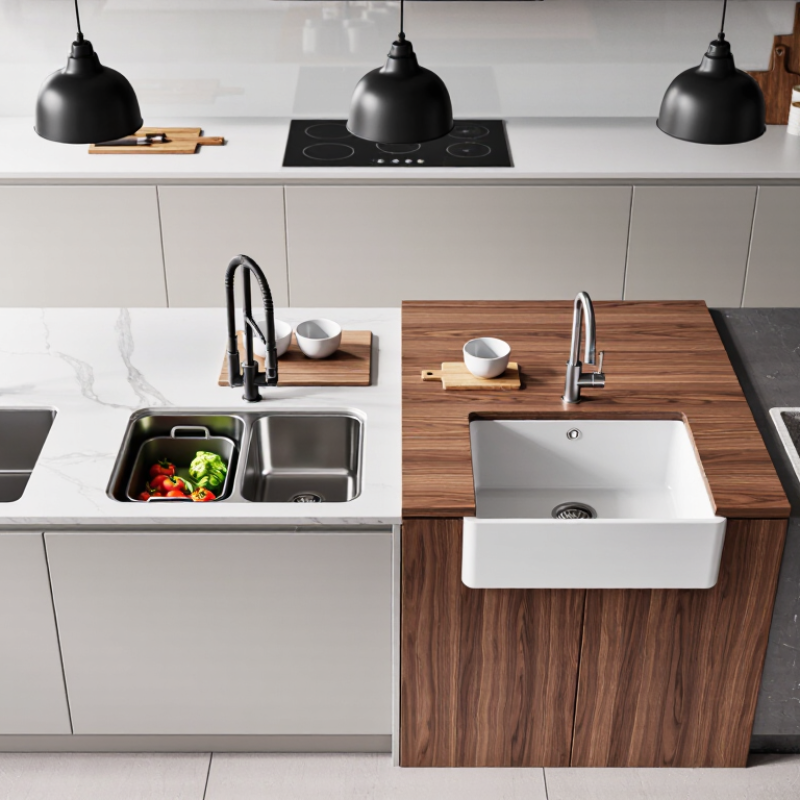
What Are the Top Types of Undermount Kitchen Sinks?

What Defines an Undermount Kitchen Sink?

An undermount kitchen sink is installed beneath the countertop, rather than resting on top of it. From above, its rim is hidden, leaving the counter edge visible around the basin. This creates a nearly continuous surface. Crumbs and small spills can be swept straight into the sink. The defining feature is the mounting method, not the bowl’s shape or material. Single-bowl, double-bowl, stainless steel, and composite sinks can all be undermount designs.

The sink is attached to the underside of the counter with clips, brackets, or another support system, then sealed to help keep water out of the joint. The countertop must have an edge that can remain exposed and handle regular moisture. That detail matters. A small drawback is easy to overlook: water can collect along the counter edge if the seal or cleaning routine is neglected. The sleek look still needs upkeep.

Tips: Confirm that your countertop is suitable before choosing a sink. Ask how the sink will be supported, and check the seal periodically. Wipe the exposed edge dry. It is a small habit, but an easy one to forget.

How Single-Bowl Undermount Sinks Are Designed

What Are the Top Types of Undermount Kitchen Sinks?

How Single-Bowl Undermount Sinks Are Designed

A single-bowl undermount sink has one open basin fitted beneath the countertop. Its uninterrupted space can make washing wide pans and baking trays easier. The basin may be rectangular, gently rounded, or softly curved at the corners. Tighter corners create a crisp look, but can take more effort to clean. Bowl depth matters too: a deeper basin hides dishes, yet may feel less comfortable for shorter users. Small detail. Check the cabinet and countertop dimensions before choosing a size.

Tips: Measure the usable cabinet width, not just the sink opening. Confirm that the faucet, drain, and plumbing fit without crowding storage below.

Good designs direct water toward a centered or slightly offset drain, reducing puddles around the basin. A sloped bottom helps, though the exact drainage depends on installation and sink shape. Undermount models also rely on a secure, well-sealed connection beneath the counter. Ask the installer how the sink will be supported, especially with heavy materials. Stainless steel is relatively light; stone and composite options can weigh more.

One trade-off is easy to miss: a spacious bowl can leave less counter area for food preparation. Think through daily tasks before settling on the largest option.

How Double-Bowl and Low-Divide Sinks Differ

Double-bowl undermount sinks have a full-height divider that creates two separate basins. You can rinse vegetables on one side and soak a pan on the other. This separation helps keep dishwater away from food preparation, but it also splits the available space. A wide stockpot may not sit flat in either bowl. Check each basin’s interior width and depth, not only the sink’s overall dimensions. Small detail, big difference.

Low-divide sinks retain two work areas, but the center wall sits below the rim. A baking sheet can rest across both sides more easily, and water can pass over the divider when the sink is very full. That convenience has a trade-off: the lower partition offers less splash separation. A deep pan can still crowd one basin. Compare the divider height with the cookware you wash by hand. Test your routine, not a showroom impression.

For either style, confirm cabinet clearance, faucet reach, and disposal placement before choosing. Undermount installation also depends on secure support and a well-sealed countertop joint. Ask the installer how the sink will be supported, especially if the basin is heavy. It is tempting to treat a low divider as a cure-all; it is not.

What Sets Workstation and Corner Undermount Sinks Apart?

Workstation and corner undermount sinks solve different kitchen problems. A workstation sink has an integrated ledge that supports sliding accessories, such as a cutting board, colander, or drying rack. These tools can move across the basin, keeping wet prep contained instead of spreading across the counter. The trade-off is practical: rails and accessories need cleaning, and a crowded ledge can feel less useful than expected.

A corner undermount sink fits into an L-shaped counter, often freeing a longer stretch of the main work surface. It can suit compact or unusually shaped kitchens, but two bowls or angled basins may be harder to reach and clean. Measure the cabinet, plumbing, and faucet clearance before choosing; a sink that fits the countertop may still be awkward below it.

The National Kitchen & Bath Association’s kitchen-planning guidelines call for a 42-inch work aisle for one cook and 48 inches for multiple cooks. Those dimensions are useful when judging whether a workstation’s prep area or a corner sink’s location will interrupt movement. They are planning recommendations, not a guarantee of comfort. Mock up the sink footprint with tape, then check how the dishwasher door and nearby drawers open. Small details matter.

Top Types of Undermount Kitchen Sinks

Compare the defining layout feature of each common type. A value of 1 means the feature is characteristic of that sink type; 0 means it is not the defining feature. Individual models can vary.

What sets workstation and corner sinks apart? Workstation sinks have an integrated ledge that supports accessories such as cutting boards or drying racks. Corner sinks are shaped or arranged to fit a kitchen corner. Single-bowl and double-bowl sinks are distinguished by whether they have one basin or two separate compartments.

How Sink Materials Shape Undermount Sink Choices?

What Are the Top Types of Undermount Kitchen Sinks?

How Sink Materials Shape Undermount Sink Choices?

Material affects more than a sink’s appearance. It changes the weight, upkeep, sound, and installation demands. Stainless steel is relatively light and resists everyday corrosion. It can suit busy kitchens, though thin models may sound louder when water hits the basin. A padded coating can soften that noise. Scratches and water spots still show, especially under bright task lighting.

Granite composite often has a matte, stone-like surface and can hide small marks well. It is heavier than many stainless options, so the cabinet and countertop need suitable support. Check the manufacturer’s installation guidance before choosing it. Fireclay and cast iron offer a solid, traditional look, but their weight calls for careful planning. A weak cabinet is not a minor detail.

Small details count. Consider how you actually use the sink: a deep basin may hold large pans, but it can feel less comfortable for shorter users. Also check that the countertop material can support an undermount installation and that the sink’s rim can be sealed correctly. Maintenance claims deserve a closer look; “stain-resistant” does not mean stain-proof. Even a durable surface can disappoint if its care needs do not fit your routine.

What Are the Top Types of Undermount Kitchen Sinks? — How Sink Materials Shape Undermount Sink Choices
Sink Type Layout and Best Use Common Materials How Material Affects the Choice Practical Checks
Single-Bowl Sink One uninterrupted basin suits washing large pots, baking trays, and bulky cookware. Stainless steel, fireclay, enameled cast iron, and granite or quartz composite. Stainless steel is relatively light and resists rust; composite and enamel-coated options offer a solid, colored appearance but are heavier. Check that the basin is wide and deep enough for your cookware, and confirm the countertop can support the sink’s weight.
Double-Bowl Sink Two separate basins allow tasks such as rinsing and washing to happen side by side. Stainless steel, fireclay, enameled cast iron, and composite materials. Material affects weight, finish, and care requirements. A center divider also reduces the room available in each bowl, regardless of material. Compare bowl widths and divider height with the largest items you wash. Check faucet reach for both bowls.
Low-Divide or Offset Double Bowl Two basins provide task separation, while a lower or off-center divider can make it easier to handle larger items. Commonly stainless steel or granite and quartz composite; other materials are available. Stainless steel generally makes large sink designs lighter. Composite versions can provide a coordinated, matte finish but may add substantial weight. Confirm the divider height and bowl proportions in person or on a dimensioned drawing; “low-divide” designs vary.
Workstation Sink Integrated ledges support compatible accessories, such as a cutting board, colander, or drying rack. Most often stainless steel; composite versions are also available. Material and ledge design affect accessory fit and care. Stainless steel is common for fabricated ledges; composite finishes may need care suited to the manufacturer’s instructions. Check accessory compatibility, usable basin space, and whether the ledges interfere with faucet placement or nearby countertop features.
Compact Single-Bowl Sink A smaller one-basin format can suit a bar, utility area, or kitchen with limited cabinet space. Stainless steel, composite, and some fireclay or enameled cast-iron models. Lightweight stainless steel can simplify handling. Heavy ceramic or cast-iron sinks may require stronger cabinet support, even in compact sizes. Match the sink’s cutout and exterior dimensions to the cabinet, plumbing, and countertop. Allow room for mounting hardware.
Material Comparison Choose the sink material alongside the layout to balance appearance, weight, maintenance, and everyday use. Stainless steel: durable and corrosion-resistant. Fireclay: ceramic with a glazed surface. Enameled cast iron: a heavy iron base with a glass-like enamel coating. Composite: typically mineral particles combined with resin. Stainless steel can show water spots or scratches. Glazed surfaces are smooth but can chip if struck hard. Cast iron is especially heavy. Composite sinks are available in varied colors and textures; performance depends on the specific product. Review the manufacturer’s care instructions, sink weight, countertop compatibility, mounting method, and any required cabinet reinforcement before purchase.