
Top Vaping Electronic Cigarette Manufacturers in China?
China is a major source of electronic cigarette hardware and related components, but the market is not simple to assess. Company websites can look polished; that alone proves little. This guide introduces manufacturers and explains how buyers can compare their capabilities without treating a product listing as a quality guarantee.
The term Vaping Electronic Cigarette covers a broad range of devices, from compact disposable designs to rechargeable systems. Manufacturers may differ in engineering, materials, production scale, and quality controls. Look for specific evidence: documented factory processes, traceable components, battery safety testing, and consistent inspection records. Ask who performs the tests, when they were completed, and whether reports match the exact model. Details matter.
Names are only a starting point. A supplier’s export experience, communication, and ability to provide accurate technical documents can also shape a reliable assessment. Requirements vary by destination, so verify applicable product, labeling, and age-control rules with qualified professionals before any commercial decision. Do not assume one certificate covers every market.
There is no perfect shortlist. Public information may be incomplete, and claims can change. A careful comparison should separate verified facts from marketing language, while noting what still needs confirmation. The sections that follow offer a practical framework for evaluating China-based manufacturers, their stated strengths, and the questions worth asking before moving forward.
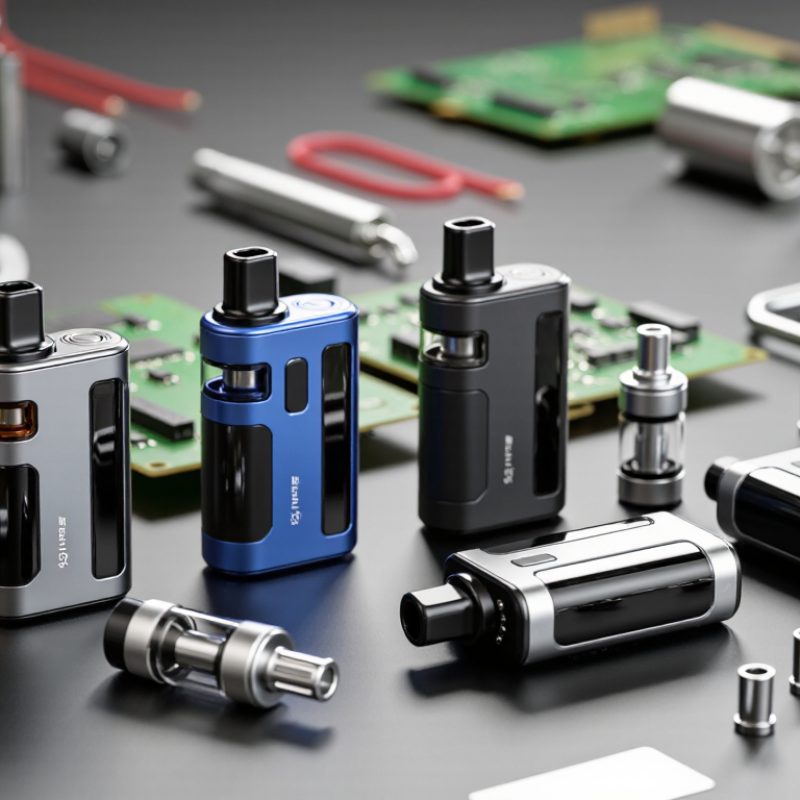
China’s E-Cigarette Manufacturing Landscape and Shenzhen’s Industry Role
China’s e-cigarette manufacturing landscape is built around connected suppliers, specialized workshops, and larger production facilities. Shenzhen plays a central role because component makers and engineering teams operate within a dense industrial network. A prototype can move from circuit design to casing adjustments quickly, sometimes within the same district. That proximity matters.
The work involves more than assembly. Manufacturers coordinate battery systems, heating components, airflow design, sensors, packaging, and production testing. Engineers may inspect sample units for electrical consistency, leakage, and fit before a design enters larger-scale production. These checks are important, but their quality can vary between facilities. The picture is not perfectly tidy.
Shenzhen’s advantage is speed and access to technical suppliers, not automatic proof of quality. Buyers evaluating a manufacturer should ask about documented testing, component traceability, staff training, and how defects are recorded and corrected. Factory visits can add useful context, though a polished showroom is not the production floor. Some details are easy to miss. Reliable manufacturing depends on repeatable processes, clear records, and independent verification rather than location alone.
Top Vaping Electronic Cigarette Manufacturers in China? — China’s E-Cigarette Manufacturing Landscape and Shenzhen’s Industry Role
| Dimension | Documented Industry Fact | Relevance to Manufacturing and Sourcing |
|---|---|---|
| Manufacturing structure | China has a substantial e-cigarette production and component-supply base, covering finished devices and supporting electronics, batteries, heating components, packaging, and assembly. | Buyers may evaluate both finished-product capability and access to a coordinated component supply chain. |
| Shenzhen’s role | Shenzhen is a major electronics manufacturing and export center and an important location within China’s e-cigarette supply network. | The wider electronics ecosystem can support prototyping, component sourcing, production coordination, and export logistics. |
| Regional concentration | E-cigarette-related manufacturing activity is concentrated in the Pearl River Delta, with Shenzhen and neighboring manufacturing cities forming part of the broader regional ecosystem. | Supplier location should be assessed alongside factory ownership, production-site location, and the location of critical subcontractors. |
| National product standard | China’s mandatory national standard GB 41700-2022, “Electronic Cigarettes,” took effect on October 1, 2022. | Products intended for the Chinese domestic market must be assessed against applicable national requirements; export products may also need to meet destination-market rules. |
| Domestic market regulation | China’s Measures for the Administration of E-Cigarettes took effect on May 1, 2022, establishing a regulatory framework that includes licensing and regulated circulation. | Domestic-market production and distribution require regulatory checks distinct from export-only manufacturing arrangements. |
| Export compliance | Export requirements vary by destination, including rules for product composition, labeling, packaging, testing, and market authorization. | Importers should verify current destination-country requirements and obtain product-specific compliance evidence before placing orders. |
| Supplier due diligence | Publicly available data do not provide a consistent, company-by-company basis for comparing all manufacturers’ output, capacity, or market share. | Use factory audits, production records, quality-system documentation, product testing, and shipment references rather than unsupported rankings. |
Note: This table summarizes industry structure and regulatory reference points, not a ranked list of manufacturers. Regulations and market-access requirements can change; verify the latest official rules for the relevant product and destination market.