Why Choose an FM Transmitter Headrest for Your Car?
Choosing an FM Transmitter Headrest can make everyday driving more comfortable, especially when passengers need easy audio access. This device combines a headrest-style design with FM transmission, sending sound from a phone or media player to the car radio. In practical use, it can reduce loose cables around the center console. It may also create a cleaner space for children, commuters, or long-distance travelers.
The best models should offer stable frequency selection, clear audio, and simple controls. Check whether the unit fits your vehicle’s headrest posts before purchasing. A loose fit can become irritating on uneven roads. I have found that placement matters more than advertisements suggest. Nearby radio stations may cause static, particularly in busy urban areas. A short setup test can reveal this quickly. Keep the volume moderate. Your radio should remain easy to hear.
Reliable brands usually provide clear specifications, safety information, and responsive customer support. Look for power details, compatibility notes, and warranty coverage. Avoid assuming that every transmitter performs equally well. Some models promise strong range but deliver ordinary results inside a small cabin. That is not necessarily a failure, but it deserves honest evaluation. Drivers should also keep controls within safe reach and avoid adjusting settings while moving. Local radio and vehicle regulations may differ, so confirm compliance before regular use. When selected carefully, an Fm Transmitter Headrest can offer practical entertainment without making the dashboard feel crowded. It is useful, but not magical.
What Is an FM Transmitter Headrest?
Why Choose an FM Transmitter Headrest for Your Car?
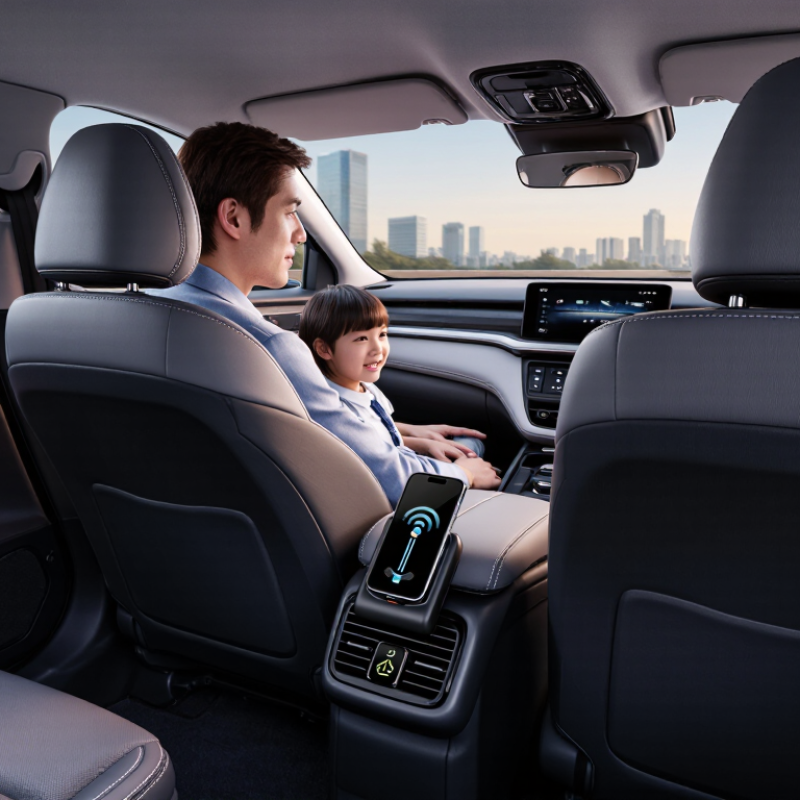
An FM transmitter headrest is a vehicle headrest with an integrated entertainment system. It can send audio from a screen, media player, or wired input to the car’s FM radio. The radio tunes to a matching unused frequency. Passengers then hear the sound through the vehicle speakers. Some units include built-in speakers, wireless controls, USB charging, or separate displays. Features vary considerably. It is not simply a radio receiver. The device creates a short-range audio broadcast inside the vehicle.
In everyday use, this headrest can replace a loose screen and reduce cables around the rear seats. A passenger may enjoy permitted offline content while the driver focuses on traffic. Audio quality depends on antenna placement, local radio interference, and transmitter performance. I have found that a clear frequency can become noisy near busy roads. That weakness matters. Before installation, check the headrest dimensions, power needs, wiring, and local frequency regulations. A qualified installer should confirm that the unit locks firmly and does not affect the seat’s safety design. Some descriptions make installation seem easier than it is. Compatibility is never automatic.
How Does an FM Transmitter Headrest Work?
Why Choose an FM Transmitter Headrest for Your Car?
An FM transmitter headrest sends audio from its built-in media system to the car radio. Its process is simple. The headrest converts digital audio into a low-power FM signal. A small antenna broadcasts that signal inside the vehicle. The car radio receives it on the selected FM frequency, then sends sound through the cabin speakers.
This design avoids extra wiring across the seats. It can support clearer passenger listening during long journeys. According to Nielsen’s 2024 Audio Today report, AM/FM radio reaches about 82% of U.S. adults each week. That figure shows why FM compatibility remains practical. Still, performance depends on distance, antenna placement, and local interference. It is not magic. Weak tuning can create static, volume changes, or overlapping broadcasts. Real-world installation may be less perfect than the product description suggests.
Tips: Choose a quiet FM frequency before playback. Keep the transmitter and car antenna reasonably close. Test both front and rear seating positions. Lower the headrest volume if distortion appears. Check the vehicle manual before changing radio settings. Also, review the device’s technical specifications and local transmission rules. Regulatory limits vary by region, so reliable documentation matters. A professional installer can check grounding, cable routing, and interference when the sound remains unstable.
Why Choose an FM Transmitter Headrest for Your Car? - How Does an FM Transmitter Headrest Work?
| Data Dimension | Typical Information | How It Works or Why It Matters |
|---|---|---|
| Primary Function | Wireless audio transmission to a car radio | The headrest system converts audio from a connected device into a low-power FM radio signal that can be received through the vehicle’s FM tuner. |
| Typical Audio Sources | 3.5 mm audio input, USB media, Bluetooth, or built-in media player | The available source depends on the design. Wired inputs generally provide a simple connection, while Bluetooth reduces cable use. |
| Signal Path | Audio source → FM modulator → FM antenna → vehicle radio → speakers | The audio is encoded by changing the frequency of a carrier wave. The car radio then demodulates the signal and plays the recovered audio. |
| FM Frequency Range | Usually within the locally permitted FM broadcast band; commonly around 87.5–108 MHz worldwide | The exact usable range varies by country and regulatory requirements. The selected frequency should be unused or weak in the area. |
| Transmission Power | Low power, normally intended for short-range in-car use | Low power helps limit interference and is generally sufficient because the transmitter and vehicle antenna are close together. Legal limits differ by location. |
| Power Supply | Vehicle accessory socket, USB power, or an internal rechargeable battery | A wired supply supports longer use, while a rechargeable battery can simplify installation and reduce visible cables. |
| Installation Style | Integrated into a replacement headrest or mounted as a headrest accessory | A headrest-based design places the entertainment unit near rear passengers and can provide a cleaner appearance than a loose portable display. |
| Passenger Use Case | Rear-seat music, podcasts, navigation audio, or video sound | Passengers can listen through the vehicle’s existing speakers without requiring a separate speaker system in the rear cabin. |
| Frequency Selection | Manual tuning or digital frequency selection | Choosing a clear frequency reduces static, overlapping broadcasts, and audio interruptions during a journey. |
| Audio Quality | FM-quality stereo audio; performance depends on the source and signal environment | Audio can be clear when the frequency is free of interference, but FM transmission may have more noise and less detail than a direct wired or digital connection. |
| Effective Operating Distance | Primarily designed for the same vehicle cabin | The short range is intentional. Vehicle bodywork, antenna location, urban congestion, and nearby radio stations can affect reception. |
| Main Advantages | Convenient placement, shared vehicle audio, fewer loose accessories, and easier rear-seat entertainment | The headrest location keeps the system within easy viewing and control range for rear passengers while using the car radio as the audio output. |
| Potential Limitations | Possible interference, limited frequency availability, installation constraints, and lower fidelity than direct connections | The system relies on an available FM channel and compatible headrest dimensions. Local laws and vehicle safety requirements should be checked before installation. |
| Best Selection Criteria | Adjustable frequency, stable power connection, suitable headrest fit, easy controls, and reliable audio input | These factors improve compatibility, reduce interruptions, and make the system more practical for regular family or passenger use. |
What Features Should You Consider Before Choosing One?
Choosing an FM transmitter headrest can make rear-seat travel more comfortable, especially when passengers want independent audio. The right model should fit your vehicle’s headrest posts securely. A loose mount may shake over rough roads. Look for adjustable brackets, soft padding, and a locking mechanism that resists movement.
Audio performance deserves careful attention. Choose a transmitter with stable frequency control and a clear display. It should let you select an unused legal FM frequency without complicated steps. Bluetooth support is convenient, while a wired input can provide a steadier connection. Some systems also include noise filtering, but results depend on your vehicle’s radio and local signal conditions. Test it before a long trip.
Power and control design affect daily use. A USB connection is practical, though the cable should not cross the passenger’s walking path. Physical buttons are often safer to operate than tiny touch controls. Check whether the screen remains readable in bright sunlight. A good unit should also manage heat during extended use. I once assumed a stronger signal always meant better sound, but interference became worse near crowded radio areas. That experience changed my preference for stable, moderate transmission. Check the vehicle’s headrest size, radio compatibility, volume limits, and installation instructions before choosing. Small details matter.
What Benefits Does It Offer for In-Car Entertainment?
Why Choose an FM Transmitter Headrest for Your Car?
A headrest FM transmitter can turn rear-seat viewing into shared listening. It sends audio to a selected FM frequency, using the car’s existing speakers. This helps when the factory system lacks modern audio inputs. The 2024 Infinite Dial report from Edison Research and Triton Digital found that 76% of Americans aged 12 and older listened to online audio monthly. A headrest system can make that listening easier during long drives, with fewer cables around passengers. Less clutter matters.
Its value extends beyond music. Children can hear a film while front passengers continue their conversation. Separate volume controls can reduce arguments, although one unit may not suit everyone. Headphones offer quieter listening when needed. The IFPI Global Music Report 2024 stated that streaming generated 67.3% of global recorded music revenue. That figure reflects strong demand for flexible, on-demand entertainment. An FM transmitter headrest connects that habit with older vehicle radios. It is a practical compromise.
In real use, performance depends on frequency availability, transmitter distance, and cabin interference. A clear unused frequency usually improves sound, but occasional hiss remains possible. Check local radio rules before operating any transmitter. Keep controls away from the driver. A small mistake can become a distraction. The setup also deserves regular inspection, because loose mounts may rattle during sharp turns or sudden braking.
Why Choose an FM Transmitter Headrest for Your Car?
An FM transmitter headrest sends audio through the vehicle’s existing FM radio, making it a practical entertainment solution for cars without Bluetooth or auxiliary input. The chart compares official FM broadcast-band ranges in selected regions.
The broad and widely standardized FM spectrum supports compatibility with many factory-installed car radios. Actual available frequencies may vary by country and local regulations.
How Can You Install and Use It Safely?
Why Choose an FM Transmitter Headrest for Your Car?
How Can You Install and Use It Safely?
An FM transmitter headrest can place audio within easy reach without adding a loose dashboard device. Its value depends on careful installation, not appearance. Choose a headrest-compatible unit that does not block the driver’s view or interfere with seat movement. Never alter the headrest posts, locking mechanism, or side-airbag area. The Insurance Institute for Highway Safety reports that seat belts and properly positioned restraints remain essential for reducing occupant injury risk. A transmitter must support that protection, not weaken it.
Keep cables away from pedals, steering controls, and sliding seat rails. Route the cable along a fixed trim edge, then secure it with low-profile clips. Leave enough slack for seat adjustment. I once routed a cable too tightly. It pulled loose when the seat moved. That small mistake was avoidable. Power the unit only after the vehicle is parked, and select an unused FM frequency before driving. Set the audio level while stationary. Do not search for frequencies during traffic. NHTSA recorded 3,308 distracted-driving deaths in 2022, showing how small tasks can carry serious consequences. Static may tempt drivers to adjust the device repeatedly. Stop safely before changing settings. The WHO estimates that road crashes cause about 1.19 million deaths worldwide each year. Clear installation helps, but it cannot replace attentive driving.