Why Choose Solar Wall Lights for Outdoor Lighting?

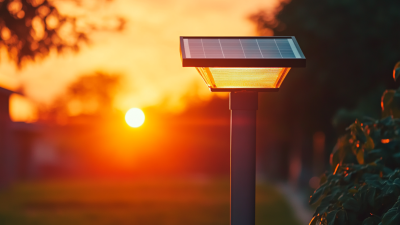
Outdoor lighting should improve safety without creating another electrical burden. Solar Wall Lights offer a practical answer for entrances, garden paths, garages, and boundary walls. During daylight, a photovoltaic panel charges an internal battery. After sunset, an LED fixture illuminates the surrounding space without trenching or continuous grid power.

The scale of solar adoption supports this choice. IRENA’s Renewable Capacity Statistics 2024 reports more than 1,400 gigawatts of global solar capacity at the end of 2023. That figure reflects a mature energy technology, not a passing design trend. The U.S. Department of Energy also states that LED lighting uses at least 75% less energy than incandescent lighting and can last up to 25 times longer. These findings explain why efficient LEDs remain central to well-designed Solar Wall Lights.

Real performance still depends on details. A shaded north-facing wall may receive weak charging. A small battery may dim before dawn after several cloudy days. Placement matters. Panel angle, motion-sensor range, lumen output, and weather protection should match the site. Look for documented testing and suitable ingress protection, rather than trusting bright marketing language. The International Electrotechnical Commission’s relevant lighting and battery standards can guide responsible product evaluation.

Solar is not magic.

A reliable installation needs direct sunlight, careful positioning, and realistic expectations. In my experience, warm light near a doorway feels more welcoming than harsh blue illumination. Yet brightness alone is not success. Good outdoor lighting should reduce glare, support visibility, and avoid disturbing neighbors or night wildlife. The strongest case for Solar Wall Lights combines measurable efficiency with thoughtful, site-specific design.
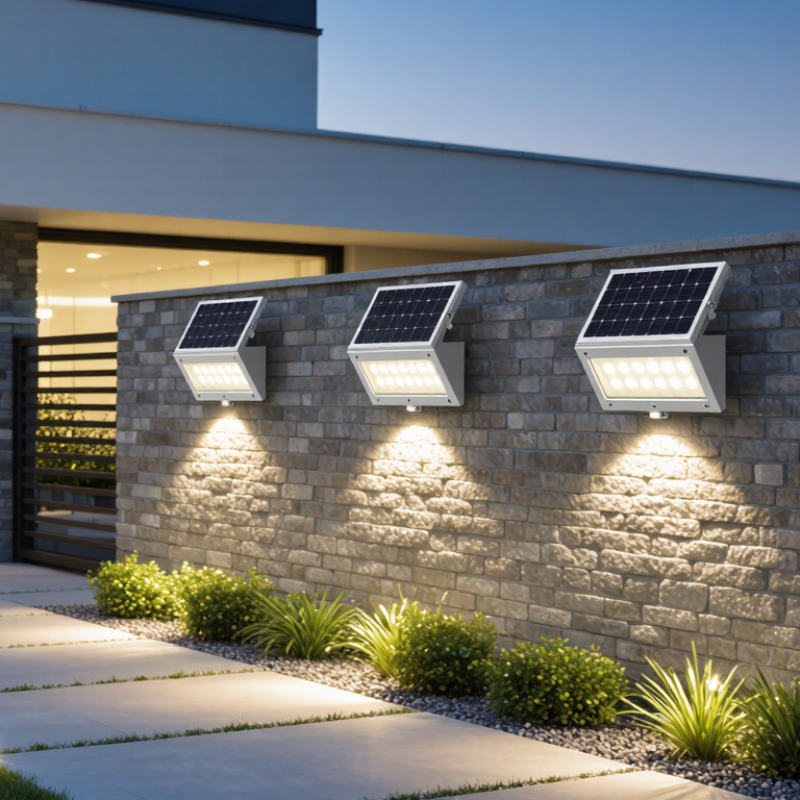
Why Choose Solar Wall Lights for Outdoor Lighting?

What Are Solar Wall Lights and How Do They Work?

Solar wall lights are compact outdoor fixtures that generate and store their own electricity. A photovoltaic panel captures sunlight during the day and converts it into direct current. A charge controller then transfers that energy to a rechargeable battery. After sunset, a light sensor activates the LED, while some models use a motion sensor for brighter, shorter illumination.

The principle is simple, but performance depends on placement. A shaded wall may leave the battery partly charged. According to the U.S. Department of Energy, LED lighting uses at least 75% less energy and lasts up to 25 times longer than incandescent lighting. This figure applies to LEDs generally, not every solar fixture. Battery quality, panel angle, temperature, and winter daylight still matter. Small details matter.

The wider off-grid solar market is expanding. GOGLA’s Global Off-Grid Solar Market Report recorded about 9.3 million off-grid solar products sold globally in the first half of 2024. Wall lights represent only one part of this category, so the figure should not be treated as direct wall-light sales. However, it reflects growing confidence in small solar-powered systems. In practical use, a wall light can illuminate a doorway, pathway, or bin area without trenching cables. Its weak point is sustained cloudy weather. A realistic installation should prioritize safety lighting, not depend on it for continuous brightness.

Key Benefits of Solar Wall Lights for Outdoor Spaces

Solar wall lights offer practical benefits for outdoor spaces, especially where trenching cables is difficult. Their photovoltaic panels charge during daylight, while LEDs provide focused illumination after sunset. The U.S. Department of Energy reports that LEDs use at least 75% less energy than incandescent lighting. This can reduce operating costs and maintenance demands.

Solar lighting also supports flexible installation. Homeowners can illuminate gates, steps, patios, and narrow side paths without connecting every fixture to the electrical grid. The International Energy Agency’s Renewables 2024 report identifies solar power as the fastest-growing renewable technology worldwide. That trend reflects improving solar efficiency, although small outdoor panels still depend heavily on weather and placement. More sunlight helps. Shade remains a serious weakness.

Tips: Install panels away from walls, trees, and roof overhangs. Choose motion sensors for low-traffic areas. Check the stated lumen output, battery capacity, and winter runtime before buying. An IP65 rating can help protect fixtures from dust and water jets, but it does not guarantee unlimited durability.

From practical installation experience, spacing matters more than brightness alone. A very bright light can create glare near eye level. Softer, evenly distributed light usually feels safer around steps and entrances. I sometimes expect solar lights to perform perfectly through several cloudy days. That assumption is often wrong. Battery aging, dirt, cold temperatures, and poor orientation can reduce performance. Reviewing the installation after one month is worthwhile. Adjusting the panel angle may improve charging more than replacing the lamp.

How Solar Wall Lights Improve Safety and Visibility

Why Choose Solar Wall Lights for Outdoor Lighting?

Solar wall lights can make entrances, paths, and side gates easier to read after sunset. A clear pool of light helps residents notice steps, uneven paving, locks, and approaching visitors. This matters because the Campbell Collaboration’s review of 13 improved-street-lighting studies reported an average 21% reduction in crime. The finding supports better visibility, but it does not guarantee safety at every property.

Solar lighting also avoids trenching and routine grid electricity use during operation. The International Energy Agency reports that lighting uses about 15% of global electricity consumption. Efficient outdoor fixtures can therefore support lower energy demand, especially when paired with motion sensors and suitable brightness. A well-aimed wall light reveals a face near the doorway without flooding a neighbour’s window. That detail matters.

Performance depends on sunlight, battery capacity, and weather. Shade from a balcony can shorten the evening runtime. Winter clouds may leave a path dim before dawn. It happens. Mount the panel where it receives direct daylight, then test the light at eye level. The U.S. Department of Energy states that LED lighting uses at least 75% less energy than incandescent lighting and lasts up to 25 times longer. Solar wall lights still need occasional cleaning and battery checks. I would not treat them as emergency lighting. Their brightness can also be uneven, and poor placement may create glare instead of security.

Why Choose Solar Wall Lights for Outdoor Lighting? - How Solar Wall Lights Improve Safety and Visibility

Data Dimension Typical Solar Wall Light Data How It Improves Safety and Visibility Practical Considerations
Light output Approximately 100–1,000 lumens for common residential models Improves visibility on entrances, steps, pathways, balconies, and driveways Higher-lumen models are better for wider areas; actual brightness depends on optics and mounting height
Motion detection range Typically 3–10 metres, depending on the sensor and installation angle Activates light when people approach, helping reduce dark spots and improve awareness Detection performance can be affected by temperature, obstacles, mounting height, and sensor orientation
Illumination duration Commonly 6–12 hours after a full day of charging; motion modes may extend operating time Provides evening and overnight lighting for safer movement around outdoor areas Runtime decreases after cloudy weather, limited sunlight, or repeated high-brightness activation
Solar charging time Usually about 6–8 hours of direct sunlight for a full charge, depending on the panel and weather Allows the light to recharge during daylight without a wired electrical connection Install the panel where it receives unobstructed sunlight; shaded locations reduce charging efficiency
Power consumption during operation Uses stored solar energy and does not draw electricity from the grid while operating Enables lighting in areas without nearby outlets and reduces the need for outdoor extension cables Performance depends on solar exposure, battery capacity, LED efficiency, and lighting mode
Weather resistance Outdoor models commonly use IP44–IP65 protection ratings Helps maintain lighting performance during ordinary outdoor exposure to rain and dust IP ratings indicate protection against solids and water; they do not guarantee resistance to flooding or severe weather
LED service life Many LED light sources are rated for approximately 25,000–50,000 hours Delivers consistent illumination with less frequent light-source replacement than traditional bulbs The rating is a manufacturer test estimate; heat, moisture, and power quality can affect actual service life
Battery replacement interval Rechargeable batteries commonly last about 2–5 years, depending on chemistry, temperature, and cycling Maintains reliable nighttime illumination when the battery is correctly maintained and replaced when necessary Use the specified replacement battery type and recycle used batteries according to local requirements
Installation requirements Normally requires a mounting surface, screws or anchors, and a location with adequate sunlight Makes it practical to add lighting to gates, paths, sheds, stairways, and remote exterior walls Check wall material, avoid blocking the solar panel, and position the light to minimize glare
Glare and light distribution Downward, forward, or diffused beam patterns are commonly available Directed light can illuminate walking surfaces while reducing harsh glare into nearby homes or roads Select a shielded or downward-facing design where pedestrians, neighbors, or drivers may be exposed to the light

Note: Specifications are typical ranges for outdoor solar wall lights. Actual performance varies by product design, solar exposure, weather conditions, battery capacity, installation height, and operating mode.

Factors to Consider When Choosing Solar Wall Lights

Solar wall lights can brighten entrances, paths, and patios without new wiring. Choosing the right model requires more than checking its appearance. Brightness matters. For a narrow doorway, 300 to 600 lumens may provide enough visibility. Wider areas need stronger output or several fixtures. Warm white light feels comfortable, while cool white light reveals more detail.

Sun exposure strongly affects performance. Place the panel where it receives several hours of direct sunlight. Nearby walls, roof edges, and trees can reduce charging. Battery capacity also deserves attention. A light with a larger battery may last through longer winter nights. Weather changes everything. Look for a suitable IP rating, sealed switches, and corrosion-resistant materials. In coastal areas, cheap metal finishes may deteriorate quickly. Plastic can resist rust, but it may become brittle in intense sunlight.

Motion sensors can save energy near rarely used doors. Check their detection range and delay settings before installation. A sensor that reacts to every passing cat becomes irritating. Installation height matters too. Around two meters often balances coverage and tamper resistance, but each wall is different. I once mounted a light beneath an overhang, assuming the panel would charge adequately. It did not. The fixture worked briefly, then faded before dawn. Testing the location for several days would have exposed that mistake. Read the specifications carefully, especially charging time, battery replacement options, and operating temperatures.

Where to Install Solar Wall Lights for Best Performance

Solar wall lights work best when their panel receives direct sunlight for six to eight hours daily.

Installation location matters more than decorative appearance. In the Northern Hemisphere, south-facing walls usually provide stronger exposure. In the Southern Hemisphere, north-facing walls are often better. Check the area at different times, because a wall may seem bright at noon but become shaded later.

Mount the light about 1.8 to 2.2 meters above the ground. This height spreads illumination across pathways while reducing accidental contact. Keep the panel away from roof overhangs, tall plants, and nearby lamps. Artificial light can confuse the sensor and prevent automatic activation.

Use masonry anchors for brick or concrete walls. Wooden surfaces may need weather-resistant screws. I once installed a light under a balcony, and its battery performed poorly. The position looked attractive, but the panel received almost no useful sun.

Tips:

Clean the panel monthly with a soft, damp cloth. Aim motion sensors slightly toward approaching paths, not directly at passing streets. Test the light after sunset. Winter performance may decline because of shorter days and cloud cover. Leave a little adjustment room, since the ideal angle may require several attempts. Some locations simply do not receive enough sunlight. In that case, moving the light higher will not solve the real problem.