
Why Choose Led Screen Panels for Global Buyers?
For global buyers, Led Screen Panels offer more than bright images. They provide scalable visual communication for airports, retail stores, stadiums, control rooms, and outdoor events. A 4-millimeter pixel pitch can create detailed indoor visuals, while higher-brightness panels support readable content under direct sunlight. Cabinet weight, service access, power consumption, and weather protection also shape the purchasing decision.
Grand View Research estimates that the global LED display market reached approximately USD 7.3 billion in 2023. Its report also forecasts continued growth through 2030, supported by advertising, entertainment, transportation, and corporate applications. MarketsandMarkets identifies fine-pitch LED displays as a major development area, especially for command centers, broadcast studios, and premium retail environments. These reports show strong demand. They do not guarantee every project will succeed.
Installation experience reveals the practical difference. A well-designed panel system should maintain consistent color across cabinets, reduce visible seams, and allow front or rear maintenance. Buyers should request brightness measurements, refresh-rate data, warranty terms, spare-part plans, and independent compliance documentation. EMC, electrical safety, and ingress protection require careful verification in each destination market.
The numbers can be imperfect. Market reports often use different definitions, regions, and revenue models. That limitation deserves attention. A low purchase price may become expensive after freight, calibration, power use, and replacement costs. Global buyers therefore need a total-cost assessment, not only a supplier quotation. Led Screen Panels can be a reliable long-term investment, but only when technical specifications match the venue, content, climate, and maintenance capability.
What Are LED Screen Panels and How Do They Work?
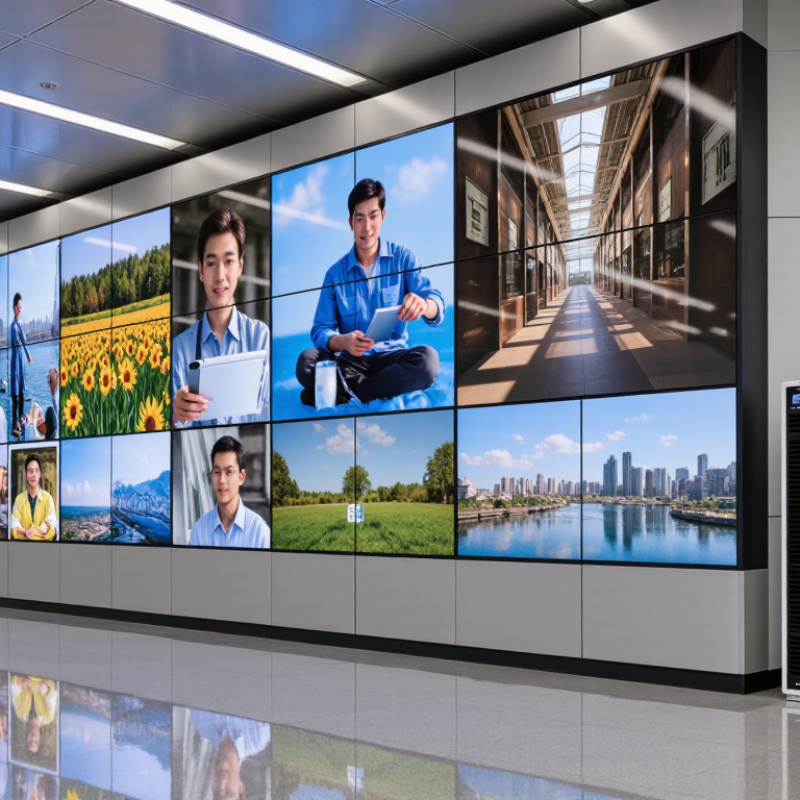
LED screen panels are modular display units built from thousands of light-emitting diodes. Each pixel usually combines red, green, and blue LEDs. By adjusting their brightness, the panel creates images, video, and text.
A control system sends digital signals to receiving cards inside the cabinet. Driver circuits then regulate each pixel’s current and timing. Refresh rate matters because low rates may produce visible flicker on cameras. Pixel pitch also matters. A smaller pitch creates sharper images at close viewing distances, while larger pitch suits outdoor screens viewed from farther away. In practice, choosing pitch by habit is a common mistake.
The global LED display market reached about USD 7.34 billion in 2023, according to Grand View Research. The report expects an 8.5% compound annual growth rate from 2024 to 2030. This growth reflects demand for retail, transport, events, and public information displays. However, market growth does not guarantee a suitable installation. Buyers should check brightness, viewing distance, power consumption, cabinet weight, thermal design, and service access. Outdoor panels may also require suitable ingress protection and compliance with IEC 62368-1 safety principles. Good specifications reduce surprises. They do not remove them. Signal compatibility, local climate, and replacement logistics still require careful verification.
Why Choose LED Screen Panels for Global Buyers? - What Are LED Screen Panels and How Do They Work?
| Data Dimension | Indoor Fine-Pitch LED | Outdoor Fixed-Installation LED | Rental and Staging LED | COB Fine-Pitch LED |
|---|---|---|---|---|
| Typical application | Control rooms, meeting rooms, retail spaces, museums and broadcast studios | Building façades, stadiums, transport areas, advertising displays and public venues | Concerts, exhibitions, conferences, touring events and temporary installations | Premium indoor viewing environments requiring high pixel density and surface protection |
| Common pixel pitch | Approximately 0.9–2.5 mm | Approximately 3–10 mm | Approximately 2.6–4.8 mm | Approximately 0.7–1.5 mm |
| Indicative minimum viewing distance | About 1–3 m, depending on pitch and content | About 3–10 m, depending on pitch and screen size | About 3–8 m, depending on venue and camera distance | Often below 2.5 m for close-viewing applications |
| Typical brightness | Approximately 600–1,500 nits | Approximately 4,500–7,000 nits | Approximately 3,500–5,500 nits | Approximately 600–1,500 nits |
| Recommended refresh rate | 1,920–3,840 Hz for smooth video and camera capture | 1,920–3,840 Hz for outdoor video and live content | 3,840–7,680 Hz for broadcast and high-speed cameras | 1,920–3,840 Hz for close-viewing and video applications |
| Common protection rating | Usually IP20 or similar for dry indoor locations | Often IP65 at the front and IP54 or higher at the rear | Commonly IP30–IP65, depending on indoor or outdoor use | Usually IP20 for indoor installations; sealed designs may offer higher protection |
| Typical power consumption | Average: approximately 150–300 W/m²; maximum: approximately 500–800 W/m² | Average: approximately 250–450 W/m²; maximum: approximately 700–1,200 W/m² | Average: approximately 200–400 W/m²; maximum: approximately 600–1,000 W/m² | Average: approximately 120–280 W/m²; maximum: approximately 400–700 W/m² |
| Common module format | Examples include 320 × 160 mm and 250 × 250 mm modules | Examples include 320 × 160 mm and 480 × 320 mm modules | Common cabinet sizes include 500 × 500 mm and 500 × 1,000 mm | Often uses smaller integrated LED packages mounted directly on a circuit board |
| LED package structure | Surface-mounted RGB LED packages | High-brightness surface-mounted RGB LED packages with outdoor protection | Surface-mounted LED packages on lightweight, serviceable cabinets | Chip-on-board LED construction with LED chips directly mounted on the board |
| How the image is produced | A controller receives video data, distributes it through receiving cards, and sends grayscale and color instructions to LED driver circuits. Red, green and blue LED elements are adjusted with pulse-width modulation to create different colors and brightness levels. Thousands of pixels combine to form the complete image. | |||
| Pixel density calculation | Approximate pixels per inch (PPI) = 25.4 ÷ pixel pitch in millimeters. A smaller pitch produces higher pixel density and supports closer viewing distances, while generally increasing cost and data requirements. | |||
| Expected service life | LED components are commonly rated for up to approximately 100,000 hours under specified operating conditions. Actual service life depends on brightness settings, operating temperature, humidity, ventilation, power quality and maintenance. | |||
| Main advantages for global buyers | High detail, wide viewing angles, seamless large-format images and low viewing-distance requirements | High brightness, weather resistance, long operating capability and strong outdoor visibility | Fast assembly, lightweight cabinets, flexible screen sizes and convenient transportation | High contrast, improved surface durability, reduced pixel visibility and close-viewing performance |
| Key purchasing checks | Confirm pixel pitch, brightness, refresh rate, cabinet dimensions, power requirements, voltage compatibility, front or rear maintenance access, protection rating, spare parts availability, control-system compatibility, transport packaging and local electrical or safety requirements. | |||
Note: The specifications shown are typical industry ranges for comparison. Actual performance varies according to pixel pitch, cabinet design, operating environment, configuration and manufacturer specifications.