What Are the Best Solar Yard Lights in 2026?
The best Solar Yard Lights in 2026 are not necessarily the brightest or most expensive. The right choice depends on your yard, local weather, and how you plan to use each area. A path needs steady, low-glare illumination; a patio may benefit from warmer light and wider coverage. Small details matter.
This guide compares the features that make a real difference, including brightness, battery capacity, solar-panel placement, weather resistance, and installation. It also considers practical trade-offs: decorative lights can create atmosphere, but may not illuminate steps clearly. Security lights often shine brighter, yet can feel harsh near a seating area. That matters.
Look beyond product photos and advertised runtimes. Shade, short winter days, and dirty panels can reduce charging, even when a light performs well in ideal conditions. Check whether the panel can be positioned in direct sunlight, and read recent buyer feedback for comments on durability and actual nighttime performance. Not always easy.
We’ll help you match light type and placement to your needs, while explaining which specifications deserve attention and which claims need a closer look. No single model suits every yard. Use the recommendations as a starting point, then consider your space, maintenance preferences, and budget before choosing.
Define Solar Yard-Light Types by Panel Power, Battery Capacity, and Beam Pattern
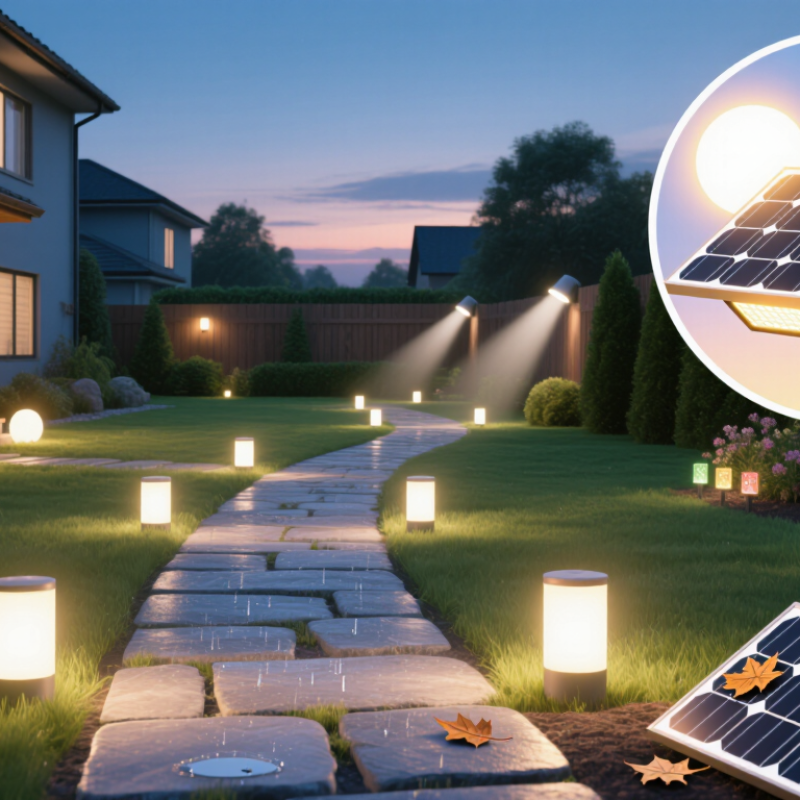
Solar yard lights are best compared by panel power, battery capacity, and beam pattern, not brightness claims alone. These categories are practical, not universal standards. A small path marker with a 0.5–1.5-watt panel suits low, decorative light. A 2–5-watt panel can support a brighter spot or compact floodlight, if sunlight reaches it for several hours.
Battery capacity shows how much energy a light can store. Compare watt-hours when possible: multiply battery voltage by amp-hours. Small markers may hold roughly 2–6 watt-hours; brighter fixtures often need more. Bigger batteries can extend runtime, but they do not guarantee it. Cloudy afternoons, shade, and cold nights all reduce performance. That detail is easy to overlook.
Beam pattern determines where the light actually lands. Narrow beams, often around 15–30 degrees, highlight a tree trunk or gate. Wider beams, roughly 60 degrees or more, cover steps or a short path, but may look dimmer across each surface. I would choose the beam before chasing the highest panel rating. Still, measuring a yard from a diagram is imperfect; fence posts and shrubs cast surprising shadows. Check whether the panel can face open sky, and treat advertised runtime as a best-case estimate.
What Are the Best Solar Yard Lights in 2026?
Compare common solar yard-light types by typical panel power, battery capacity, and beam pattern.
Values are representative midpoints of commonly available specifications, not ratings for specific products. Pathway lights typically spread light around the fixture; spotlights concentrate it into a narrower beam; floodlights cast a wider beam; and string lights distribute light along the strand. Actual specifications vary by model.
Compare Brightness in Lumens and Ground-Level Illuminance in Lux (1 lx = 1 lm/m²)
When comparing solar yard lights, separate lumens from lux. Lumens describe the total visible light a lamp produces. Lux tells you how much light reaches a square metre of a surface. The relationship is 1 lx = 1 lm/m², but it does not mean a lamp’s lumen rating predicts ground brightness by itself. That distinction matters. A narrow beam can create a bright patch, while the same output spread widely may look dimmer underfoot. Lens shape, mounting height, and beam angle all affect the result.
For a useful comparison, measure lux at ground level where you walk, read, or place steps. Keep the meter in the same position and compare lights after dark, at similar heights. A handheld lux meter is more dependable than a phone app, though both can help spot differences. I still find this easy to misread: one bright point can hide dark gaps between fixtures. Check several points along a path, not just directly beneath each light. Solar output also changes with charge, shade, and weather. A cloudy day can matter. Record the conditions, since a single reading may not represent a typical evening.
Estimate Nightly Runtime from Battery Watt-Hours and LED Power Draw
To estimate a solar yard light’s runtime, divide usable battery energy in watt-hours by the LED’s power draw in watts. A 7.4 Wh battery powering a 0.5 W LED gives a theoretical runtime of about 15 hours. That is the clean calculation, not a guarantee.
Real lights lose some energy in their driver and wiring, and battery capacity can fall with age or cold weather. If roughly 80 percent of that battery is usable, the estimate drops to about 12 hours. A dimming setting may stretch runtime; motion-triggered lighting can change it even more. Check whether the listed LED wattage reflects steady output or only its brightest mode. Small detail, big difference.
I use the estimate as a planning tool, then compare it with a few nights outdoors. My first calculation often looks too optimistic. Record the battery’s watt-hours and the light’s actual draw, if available, and leave a reserve for cloudy days. For example, a 6 Wh usable battery paired with a 0.6 W LED suggests around 10 hours. Shade, temperature, and battery wear can shorten that figure, so treat it as approximate rather than promised.
What Are the Best Solar Yard Lights in 2026? — Estimated Nightly Runtime
| Light Type / Mode |
Battery Rating |
Nominal Battery Energy |
Estimated Usable Energy |
LED Power Draw |
Estimated Runtime |
| Path marker — standard |
3.7 V × 1.2 Ah |
4.44 Wh |
3.55 Wh |
0.30 W |
11.8 hours |
| Decorative garden globe — standard |
3.7 V × 2.0 Ah |
7.40 Wh |
5.92 Wh |
0.45 W |
13.2 hours |
| Adjustable spotlight — low mode |
3.7 V × 2.2 Ah |
8.14 Wh |
6.51 Wh |
0.65 W |
10.0 hours |
| Adjustable spotlight — high mode |
3.7 V × 2.2 Ah |
8.14 Wh |
6.51 Wh |
1.20 W |
5.4 hours |
| Solar wall light — low mode |
3.7 V × 3.0 Ah |
11.10 Wh |
8.88 Wh |
0.80 W |
11.1 hours |
| Solar wall light — high mode |
3.7 V × 3.0 Ah |
11.10 Wh |
8.88 Wh |
2.00 W |
4.4 hours |
Estimates use nominal battery energy (volts × amp-hours), assume 80% is usable after conversion losses and reserve, and calculate runtime as usable watt-hours ÷ LED power draw. Figures are illustrative; actual runtime varies with battery condition, temperature, charging, and brightness controls.
Check Weather Protection Against IEC 60529 Ratings, Including IP65
When comparing solar yard lights in 2026, look beyond phrases like “weather resistant.” Check the enclosure’s IEC 60529 rating, a standard that classifies protection against dust and water. An IP65 rating means the light is dust-tight and tested to withstand water jets from any direction. That can suit exposed garden paths, where sprinklers and wind-driven rain are common.
But IP65 does not mean waterproof for immersion. Don’t leave a light submerged in a puddle or assume every cable connection has equal protection. The rating applies to the tested enclosure, and installation details matter. Look for clear instructions on sealing, mounting, and charging-panel placement. Check that covers sit flush and seals are not cracked. Small details count.
A rating is useful, not magical. Tests use defined conditions, while real yards bring mud, temperature swings, and years of wear. I’d treat IP65 as a sensible baseline for many open-air locations, then inspect the light after storms and clean around its seams. This part is easy to forget. If a maker gives no specific IP rating, ask for documentation rather than relying on a vague weatherproof claim.
Rank 2026 Picks by Efficacy (lm/W), Controls, Warranty, and Verified Performance
What Are the Best Solar Yard Lights in 2026?
Rank 2026 Picks by Efficacy (lm/W), Controls, Warranty, and Verified Performance
A useful ranking starts with measured light output, not the largest number on a box. Divide tested lumens by electrical input watts to compare efficacy. The U.S. Department of Energy’s 2022 Solid-State Lighting R&D Opportunities report sets a 250 lm/W target for LED packages by 2035. That is a component-level goal, not a promise for complete solar fixtures. Panel losses, batteries, optics, and cold nights all affect real performance. Small details matter.
Compare lights after dusk, with similar battery charge and placement. Prefer independent photometric results using IES LM-79 methods, and check whether tests report output after several hours. Rank controls by useful options: adjustable brightness, motion sensing, and a clear low-battery mode. A longer warranty can help, but read what it covers; battery capacity may fade before the fixture fails. I would not treat a long runtime claim as proof without test conditions.
Tips: Place the panel where it receives direct sun, then check the beam on the ground. Look for dark gaps near steps and paths. Record brightness at dusk and again before dawn. It is a little fussy, but that check can reveal more than a polished specification sheet.